When individuals grow older, the need for stability becomes a prerequisite for independence and coexisting with the inevitable daily routine with confidence. One of the major health threats to the elderly population is falls, but they can be prevented through proper interventions and assistance.
Older adults can entail themselves longer in physical activities by adopting regular balance exercises for seniors, taking professional physiotherapy, and focusing on the goal of maintaining good mobility slowly.
Why Balance Declines With Age
All the age-related factors like decline in muscle strength and joint flexibility, poor vision and slower reaction time can influence balance all at once. Less physical activity and prior injury may also have a negative influence on the coordination. Structured balance exercises for seniors are thus essential as they help the body learn to react properly to the changes in posture. When combined with professional geriatric physiotherapy, these exercises deal with physical and mental aspects together while encouraging mobility improvement.
Benefits of Balance Training for Older Adults
Fall Prevention and Confidence
Among the main objectives of balance exercises for the elderly is the prevention of falls. Better balance exercises for seniors gives rise to the feeling of security while walking, climbing stairs, and doing daily activities. In geriatric physiotherapy, older adults acquire safe methods that are strong enough to benefit without causing fatigue resulting in the gradual improvement of mobility.
Better Posture and Coordination
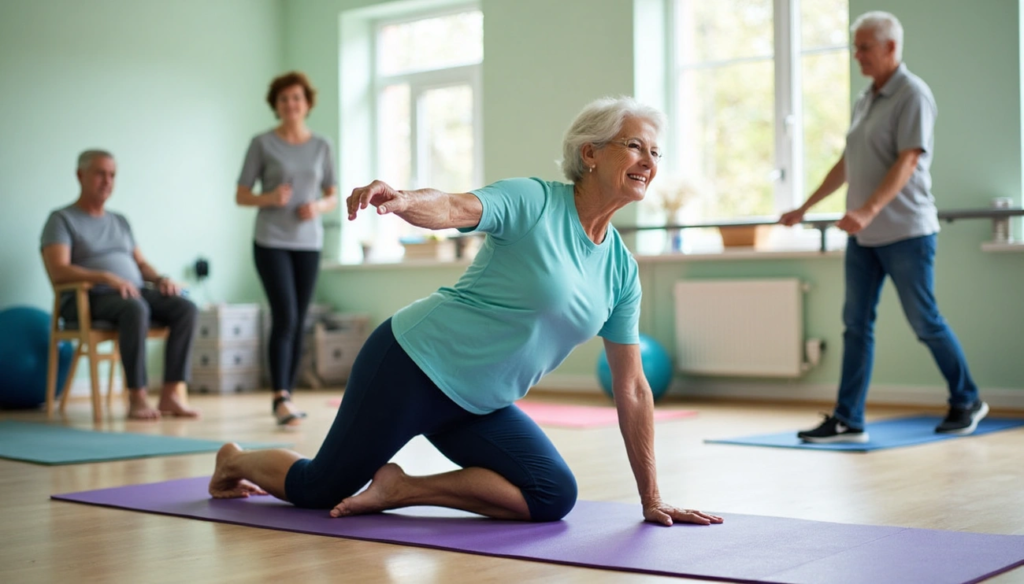
Daily practice opens the door to promoting better posture and body awareness. The strengthening of the core and lower limbs does the job of unifying the body that is now making movements more fluid and controlled. This method, often supported by geriatric physiotherapy, not only guarantees the improvement of mobility but also the safe movement patterns to accompany that improvement.
The Role of Geriatric Physiotherapy
Personalized Assessment and Planning
No two seniors are alike in their physical needs. Geriatric physiotherapy starts with a strength, flexibility, and balance assessment. On the basis of this, therapists prepare individual balance exercises for the elderly that correspond to the current capabilities while pushing for progress and mobility improvement.
Safe Progression and Monitoring
Programs with supervision correspond with the injury risk being cut down. Geriatric physiotherapy births the background in coordination improvement that is wrought through the gradual and safe advancement of exercises. This structured progression allows balance exercises for seniors to gain confidence and over time have mobility improvement that is regular and thus feels better.
Effective Balance Exercises for Seniors
Standing Heel-to-Toe Walk
The coordination and posture get better through this exercise. It is performed every day to support alignment and is a major factor in developing balance in the elderly. Besides, it helps overall mobility improvement.
Single-Leg Stand
Holding a support while standing on one leg, balance is being tested with safety. This exercise is one of the most recommended in geriatric physiotherapy, as it not only strengthens the stabilizing muscles but also improves the reaction time.
Seated Weight Shifts
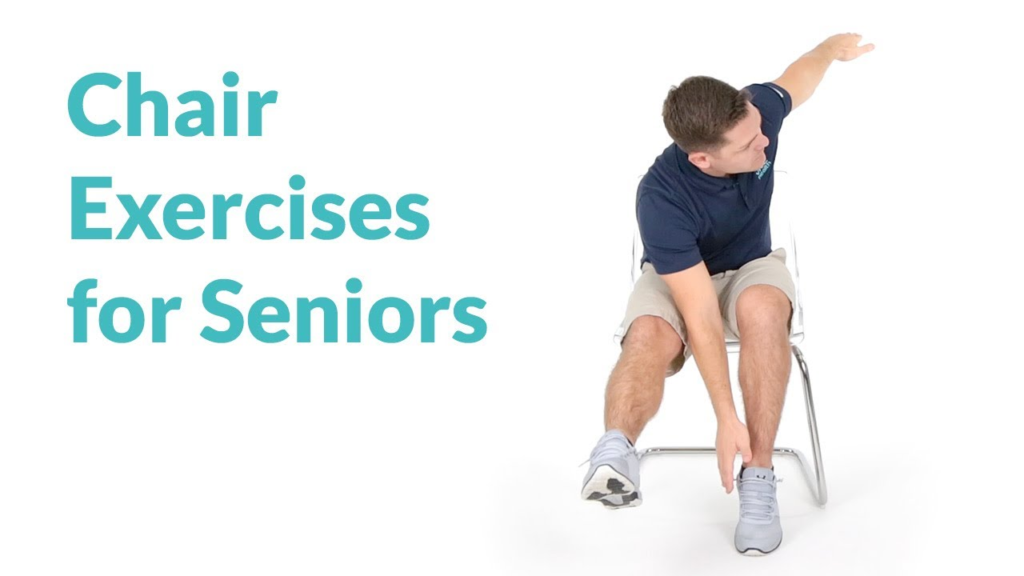
Seated movements help to develop control in people who cannot stand for a long time. These modified balance exercises for seniors promote muscle engagement and gentle mobility improvement without strain.
Creating a Daily Balance Routine
It is better to have a consistent practice rather than an intense one. Senior daily sessions featuring balance exercises, even if they are short, do not go unrecognized. Many elderly people gain from the combination of balance training with light strength work, which is however, supervised by physiotherapy professionals. This approach makes daily routines easy and at the same time, assures the mobility improvement of the seniors is done at a steady pace.
Integrating balance practice into daily life, for instance, standing on one foot while brushing teeth, is not only a naturally but also a safe way to reinforce skills.
Supporting Balance Through Lifestyle Choices
Training for balance is most effective when it comes with the lifestyle habits that support it. Proper footwear, good lighting at home, and clutter-free walkways help to increase safety. Nutrition and hydration also play a role in muscle function and coordination. When these factors are present together with balance exercises for seniors, the triumph becomes more long-lasting. Geriatric physiotherapy frequently entails the provision of advice regarding these daily changes that are aimed at maximising the mobility improvement of the patient.
Long-Term Benefits of Balance Training
Better stability results in less reliance on others and more interaction with people. Elderly individuals who regularly perform balance exercises often say they feel more self-assured, and they actively take part in traveling, daily activities, and family gatherings. Moreover, the support of geriatric physiotherapy helps make this mobility gain permanent and reduces healthcare risks.
A Holistic Approach to Healthy Ageing
Preventing falls means not only protecting one’s health from injuries but also maintaining the quality of life. Working on strength, coordination, and awareness, elderly people develop the ability to bounce back and have the upper hand. Geriatric physiotherapy ensures that the exercises for elderly ones are safe, effective, and geared towards the long-term goal of mobility improvement while at the same time supervising the programs. Kinesio and other well-known companies keep on advocating for movement support and education as integral parts of the healthy ageing process.
Moving Forward With Confidence
Balance training is a lifelong investment in independence. With the right guidance, patience, and consistency, seniors can continue to move confidently and safely. Combining structured routines, professional insight, and supportive tools highlighted by Kinesio allows older adults to maintain stability, prevent falls, and enjoy meaningful mobility improvement well into later years.
FAQs: Balance Exercises for Seniors in the UAE
Why are balance exercises important for seniors in the UAE?
Balance exercises help prevent falls, which are a leading cause of injury among older adults. In the UAE, hot weather can sometimes reduce outdoor activity, making home-based exercises essential for maintaining strength and stability.
What types of balance exercises are safe for seniors?
Safe exercises include:
-Heel-to-toe walking
-Single-leg stands (with support if needed)
-Chair-assisted squats
-Gentle yoga or Tai Chi movements
How often should seniors do balance exercises?
For most seniors, 10–15 minutes per day or 3–4 times a week is sufficient to maintain stability. Consistency is more important than intensity.
Can seniors in the UAE perform these exercises at home?
Yes! Many balance exercises can be done safely at home using a chair or wall for support. Non-slip mats and comfortable footwear are recommended, especially on tiled or marble floors common in UAE homes.
Are there local facilities in the UAE for seniors’ balance and fitness programs?
Yes, major cities like Dubai and Abu Dhabi offer senior-friendly fitness classes, physiotherapy clinics, and community centers focusing on fall prevention and mobility exercises.
Should seniors consult a doctor before starting balance exercises?
Yes, especially if they have chronic conditions like arthritis, osteoporosis, or heart problems. A physiotherapist or doctor can recommend exercises tailored to their abilities.
Can diet and hydration affect balance in seniors?
Absolutely. Adequate hydration, calcium, and vitamin D intake are important for bone health and muscle function. The UAE’s hot climate makes hydration especially critical.
Are there assistive devices that help seniors stay balanced?
Yes, items like canes, walkers, and grab bars can support stability. Physiotherapists in the UAE can provide guidance on proper use.
How can seniors stay motivated to do balance exercises regularly?
Setting small daily goals, joining senior exercise groups, or following online tutorials can make routines engaging. Local senior clubs often organize group exercise sessions, which also help with social interaction.
Are there online resources in the UAE for senior fitness and fall prevention?
Yes, several UAE-based health portals and wellness centers provide instructional videos, physiotherapy tips, and fall-prevention guidelines for seniors.