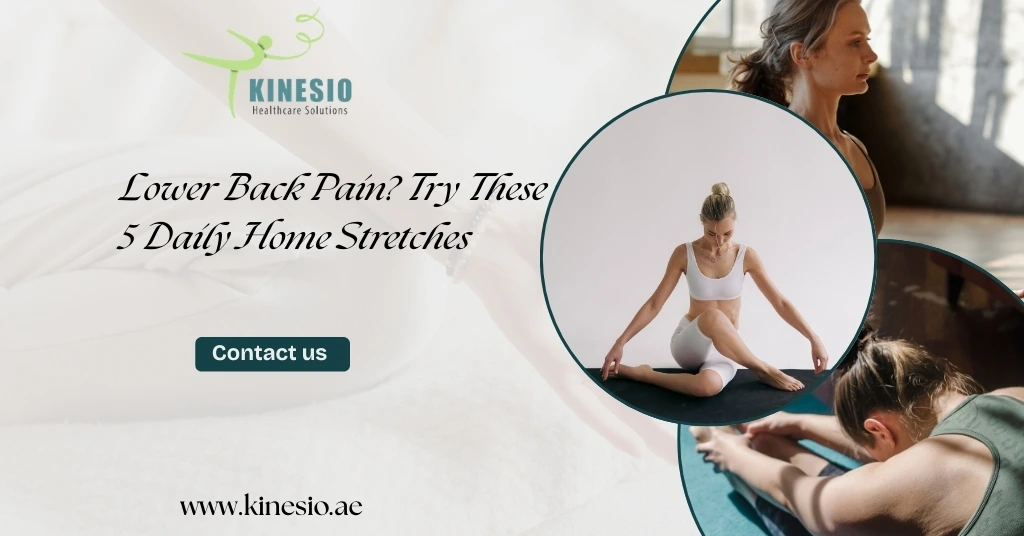
Adults frequently experience lower back pain as their most common physical health issue. Continuous discomfort at work results from employees spending extended periods at their desks while maintaining incorrect body posture and developing muscle imbalances and office workers fail to take breaks. Regular home workouts lead to better movement abilities and create enduring relief for body discomfort. Daily exercise of back pain stretches enables you to achieve substantial health improvements through this straightforward movement practice.
Why Stretching Helps Lower Back Pain
The following five tested exercises provide lower back pain relief through their ability to decrease muscle tension while enabling users to achieve their goals without needing special equipment. These stretches for back pain can be done in the comfort of your living room and only take a few minutes each day.
Lower back strain results from tightness in the hip and hamstring and core muscles. When these surrounding muscles lack flexibility, the lower spine compensates, leading to discomfort. The body benefits from light home exercise because it enhances blood flow while maintaining body flexibility and reducing lower body stiffness. Daily back pain relief stretching exercises help you create better body alignment while your muscles become less tense throughout your day. The movements enable your body to achieve proper alignment while helping you attain permanent relief from lower back discomfort.
Cat-Cow Stretch
The Cat-Cow stretch is a foundational movement in many mobility routines because it gently mobilizes the spine.
How to Perform:
Start the exercise by kneeling on the ground with your arms extended forward.
You should breathe in while you lower your stomach to the ground and raise your head (Cow).
You should breathe out while you round your back and bring your chin to your chest (Cat).
Execute the exercise at a slower pace during 8 to 10 breathing cycles.
This home exercise with its continuous movement pattern enables better spinal movement while it helps blood flow to the lower back area. The body develops better movement ability through daily practice because it helps ease body stiffness and prepares muscles for upcoming back pain relief stretches. The addition of this movement to their daily activities helps most individuals achieve gradual relief from lower back pain.
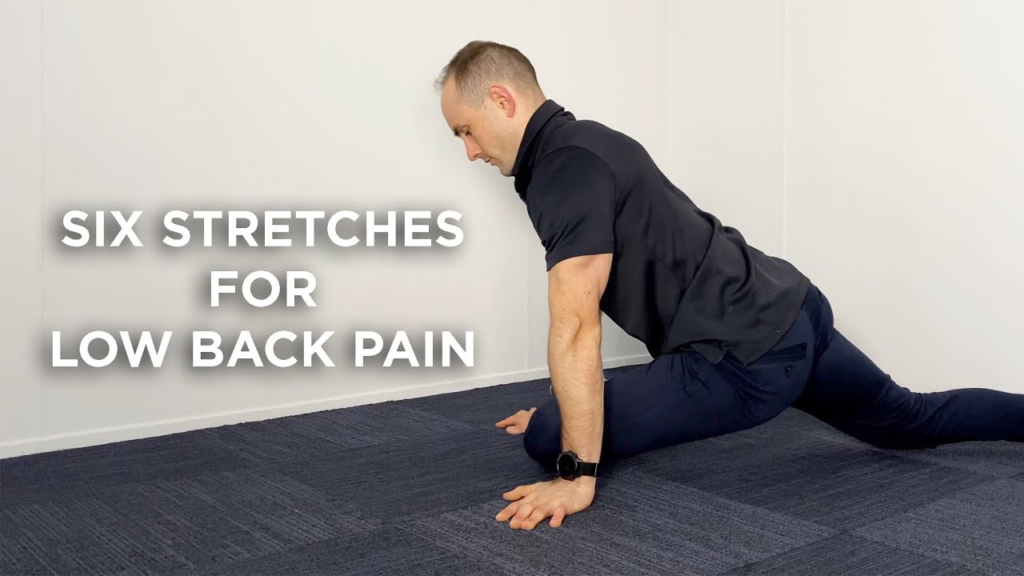
Child’s Pose
Child’s Pose gently stretches the lower spine and hips while promoting relaxation.
How to Perform:
Sit back on your heels after kneeling down on the floor.
You should extend your arms forward while you lower your body to the ground.
You should place your forehead on the mat and perform deep breathing exercises for 30 to 60 seconds.
This home exercise creates a calming effect while it helps to decompress the spine and stretch out tight muscles. The method proves effective during nighttime activities because it helps to relieve body stiffness which develops after spending a full day at work. The dedicated practice of this position combined with other back pain stretches will lead to continuous lower back pain relief throughout the future.
Knees-to-Chest Stretch
This simple stretch targets tension directly in the lumbar area.
How to Perform:
Lie flat on your back with knees bent.
Bring both knees toward your chest.
Wrap your arms around your legs and hold for 20–30 seconds.
The exercise helps to release tightness in lower back muscles while it improves blood circulation through the body. The stretch serves as an introduction to back pain relief for beginners because it functions as one of the easiest stretching exercises. The practice leads to better flexibility and lower back pain relief through regular execution while it also helps to reduce overall body stiffness.
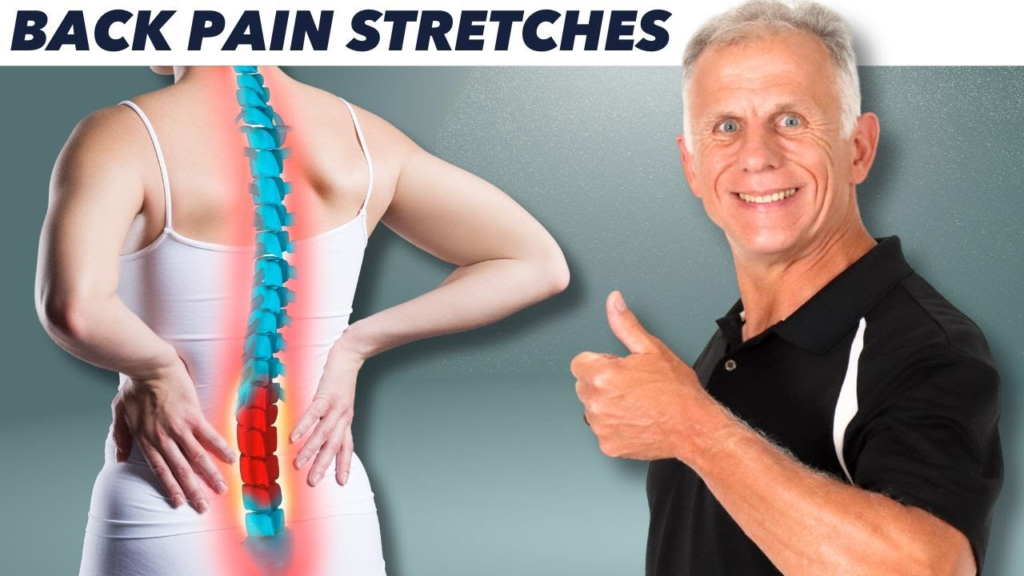
Seated Forward Fold
Tight hamstrings often pull on the pelvis, contributing to lower back tension.
How to Perform:
The position requires you to sit on the floor while extending your legs.
Your body needs to bend forward at the hips until you can reach your toes.
People should maintain their back straight because excessive rounding should be avoided.
The duration of the exercise requires 20 to 30 seconds.
The home exercise stretch targets both the hamstrings and the lower spine area. The stretch proves to be the most effective method to relieve back pain when hamstring tightness exists as a problem. The practice of regular stretching in this position helps people with lower back pain while providing them with extended relief from stiffness.
Supine Spinal Twist
Twisting movements gently mobilize the spine and relieve muscular tension.
How to Perform:
- Lie on your back with arms extended to the sides.
- Bend one knee and guide it across your body.
- Keep your shoulders grounded and hold for 20–30 seconds.
- Switch sides.
This restorative home exercise encourages rotation in the spine and eases muscular tightness. Adding this to your routine enhances the effectiveness of other stretches for back pain and promotes balanced flexibility. With consistent practice, many individuals experience measurable lower back pain relief and improved overall mobility.
Creating a Daily Routine for Lasting Relief
The practice of consistent training delivers better results than training at high intensity. The daily execution of these exercises will lead to improved flexibility and muscle strength through the implementation of a gentle home exercise routine. The combination of breathing techniques with every movement will help you achieve better relaxation results and greater relief from stiffness.
Begin your day with five to ten minutes of practice which you can continue until your bedtime. The back pain stretches will result in better posture and stronger back muscles which will lead to permanent relief from lower back pain. The process requires you to maintain a slow pace while you need to stay away from any form of intense pain.
Supporting Your Stretching Routine
Athletic recovery improves through the combination of stretching and specific supportive equipment. People use specific support items together with their home workout routine to achieve proper body alignment and minimize physical stress during daily activities.
Kinesio products provide dual benefits through their muscle and joint stabilization support which athletes use during workouts and their recovery process. Kinesiology taping enables better blood flow to muscles which creates more comfort for back pain sufferers who use stretching exercises.