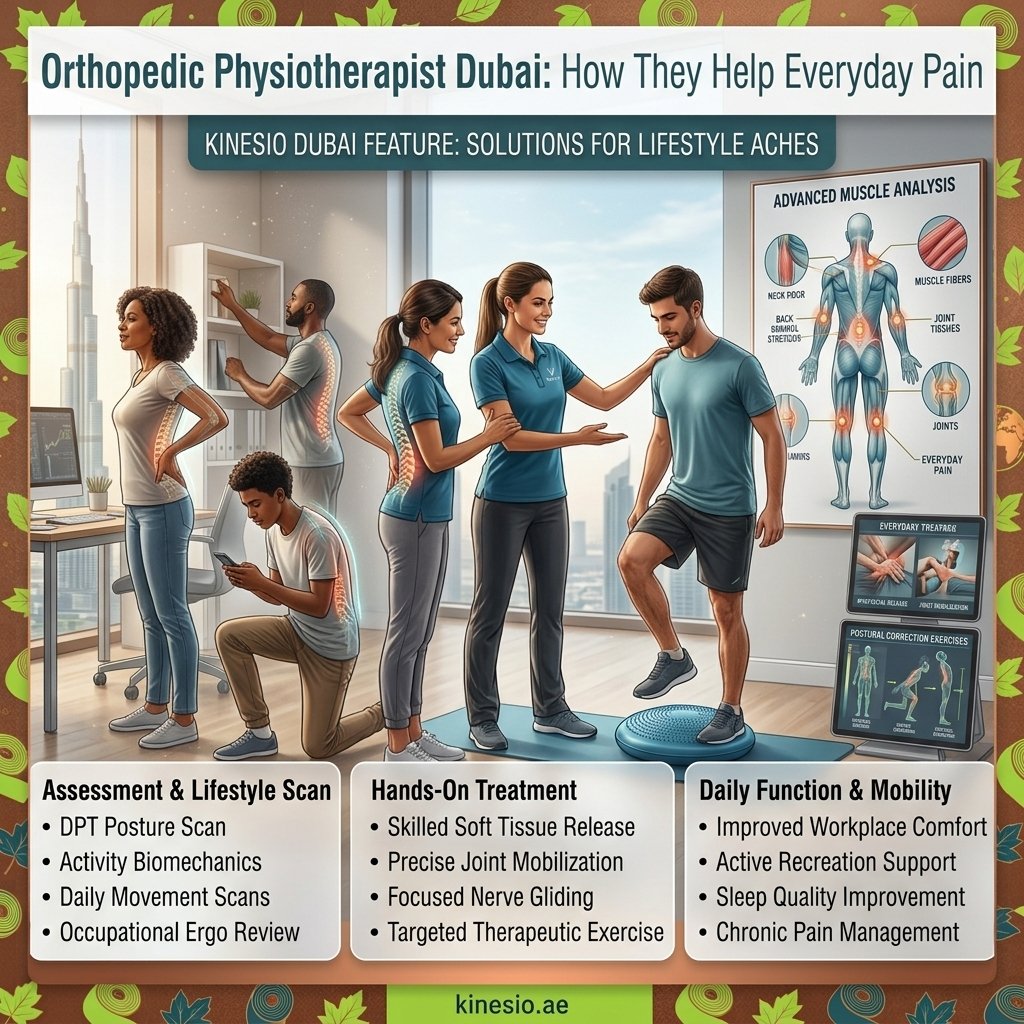
Pain in your back, knee, shoulder, hip, ankle or another part of the body can slowly change the way you live your day.
You may start avoiding stairs because your knee hurts. You may stop going to the gym because your shoulder feels weak. Sitting at your desk for several hours may leave your back stiff. An old sports injury may continue to bother you long after the original injury seemed to heal.
These are some of the situations in which people begin looking for orthopedic physiotherapy Dubai.
But what exactly does orthopedic physiotherapy treat?
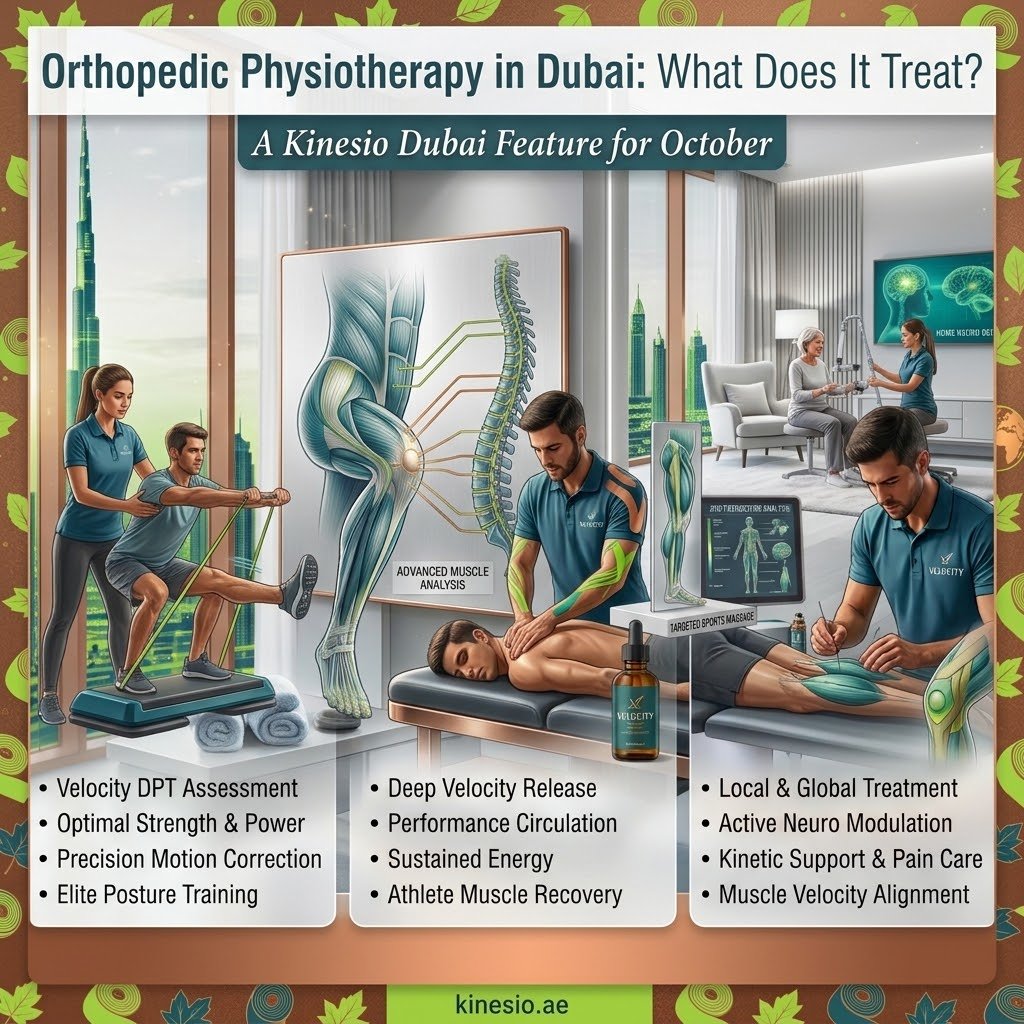
In simple terms, orthopedic physiotherapy focuses on conditions affecting the musculoskeletal system, including muscles, bones, joints, tendons and ligaments. It can help people recover from injuries, improve movement after surgery, manage persistent musculoskeletal problems and gradually rebuild strength and function.
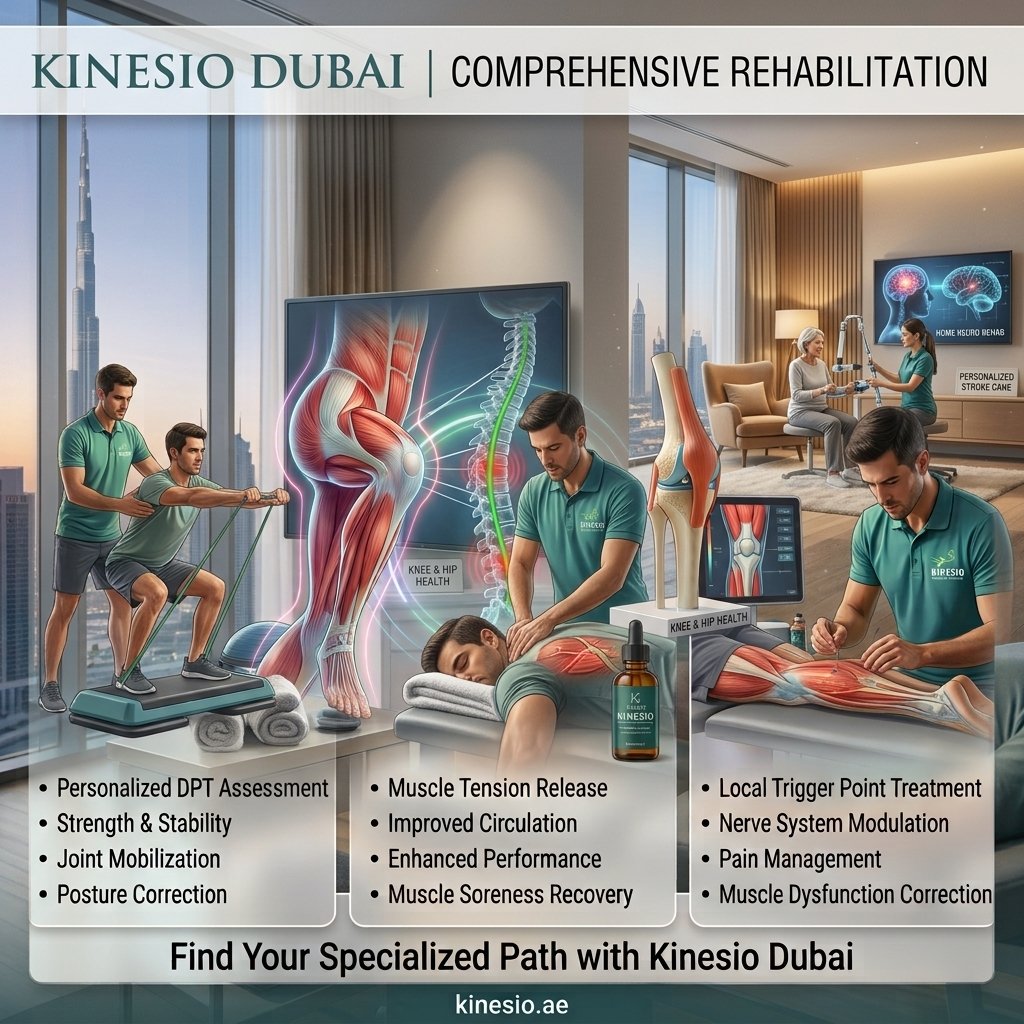
At Kinesio Healthcare Solutions, the musculoskeletal and orthopedic physiotherapy service covers conditions including sports injuries, overuse injuries, spinal conditions, joint pain, muscle weakness, fractures, dislocations and post-surgical rehabilitation. Treatment is described as personalised around the patient’s condition, goals and lifestyle.
For someone searching for a physiotherapist Dubai, understanding what orthopedic physiotherapy actually covers is a useful first step.
What Is Orthopedic Physiotherap
Orthopedic physiotherapy is a branch of physiotherapy focused primarily on musculoskeletal problems.
The word “orthopedic” is sometimes associated only with bones or surgery, but orthopedic physiotherapy covers much more than that.
It can involve rehabilitation for:
- Muscles
- Joints
- Tendons
- Ligaments
- Bones
- Movement problems
- Sports injuries
- Post-surgical conditions
- Chronic musculoskeletal conditions
The goal is usually not just to make pain disappear temporarily.
A physiotherapist may also work on improving range of motion, strength, balance, movement control and your ability to return to normal activities.
For example, a person with knee pain may need to improve leg strength and movement before returning comfortably to stairs or exercise.
Someone recovering from shoulder surgery may need a carefully progressed programme to restore movement and strength.
An athlete with an ankle injury may need rehabilitation that eventually progresses from simple movement to running and sport-specific drills.
That is why orthopedic physiotherapy is best understood as assessment plus rehabilitation, rather than simply a treatment for pain.
What Conditions Does Orthopedic Physiotherapy Treat?
One of the most common questions people ask is, “What problems can an orthopedic physiotherapist actually treat?”
There is a wide range.
Back and Neck Problems
Back and neck conditions can involve pain, stiffness, restricted movement or difficulty with daily activities.
Physiotherapy may include exercise, mobility work, education and manual therapy depending on the individual’s presentation.
Joint Pain
Knee, shoulder, hip, ankle and other joint problems are common reasons people seek musculoskeletal care.
The assessment may consider joint movement as well as the muscles and surrounding structures that influence function.
Sports Injuries
Sprains, strains, tendon problems and other sports injuries can require structured rehabilitation before an athlete returns to unrestricted activity.
Overuse Injuries
Repeated loading can sometimes contribute to conditions such as runner’s knee or tennis elbow.
Treatment may involve modifying activity, improving strength and gradually increasing load tolerance.
Post-Surgical Rehabilitation
Physiotherapy can be part of recovery following certain orthopedic procedures, including joint replacement or ligament repair.
The programme needs to take the surgery and healing stage into account.
Muscle Weakness and Imbalances
Reduced strength can affect movement and everyday function.
A physiotherapist may use progressive strengthening to improve physical capacity.
Fractures and Dislocations
After appropriate medical treatment, rehabilitation can help restore movement and strength during recovery.
Kinesio’s orthopedic physiotherapy service specifically lists overuse injuries, sports injuries, spinal conditions, post-surgical rehabilitation, joint pain, muscle weakness, fractures and dislocations among the conditions it treats.
Orthopedic Physiotherapy for Joint Pain
Joint pain is one of the biggest reasons people search for joint pain physiotherapy.
The painful joint, however, is not necessarily the only part of the problem.
A physiotherapist may also examine:
- Muscle strength
- Joint mobility
- Movement patterns
- Balance
- Physical activity
- Previous injuries
- Training load
- Functional limitations
Consider knee pain.
Two people can both say, “My knee hurts,” but have completely different reasons for experiencing that pain.
One person may have symptoms following a sports injury.
Another may have osteoarthritis.
Another may have pain after increasing running mileage.
Another may have developed weakness after a period of inactivity.
The treatment should therefore be based on assessment rather than simply giving every knee-pain patient the same exercises.
What Is Musculoskeletal Physiotherapy?
You may also come across the term musculoskeletal physiotherapy Dubai when searching online.
Musculoskeletal physiotherapy is a broad term describing physiotherapy for conditions affecting the muscles, joints, bones and related structures.
In many cases, people use “musculoskeletal physiotherapy” and “orthopedic physiotherapy” in overlapping ways.
The practical focus is similar: helping people with movement-related problems improve comfort, physical function and capacity.
At Kinesio Healthcare Solutions, musculoskeletal and orthopedic physiotherapy is offered as a dedicated service, with treatment plans designed around individual symptoms and goals.
This type of care can be particularly useful when pain is affecting your ability to work, exercise, walk, sleep or perform normal daily activities.
When Should You See an Orthopedic Physiotherapist?
You do not necessarily need to wait until a problem becomes severe.
An orthopedic physiotherapy assessment may be worth considering when:
- Pain continues instead of improving
- A joint feels stiff
- You have reduced strength
- Movement is becoming limited
- An injury is affecting normal activities
- An old injury keeps returning
- Exercise has become difficult
- You are recovering after surgery
- You want to return to sport safely
Persistent symptoms are especially worth assessing when they begin affecting everyday life.
For example, if shoulder pain prevents you from reaching an overhead shelf, or knee pain makes stairs difficult, the problem is no longer just a minor inconvenience.
It is affecting function.
That is one of the central reasons physiotherapy looks beyond pain and focuses on movement and capacity.
What Happens During an Orthopedic Physiotherapy Assessment?
Many people feel unsure about what will happen during their first appointment.
A good assessment begins with questions.
The physiotherapist may ask:
When did your symptoms begin?
Was there a specific injury?
What movements make the pain worse?
What activities have you stopped doing?
Does the problem affect sleep?
Have you had similar symptoms before?
Do you exercise or play sport?
What are you hoping to get back to?
After discussing your history, the physiotherapist may assess movement and physical function.
This can include checking:
- Range of motion
- Muscle strength
- Balance
- Flexibility
- Movement control
- Walking or functional movement
- Relevant joints and surrounding tissues
The findings help determine the most appropriate rehabilitation approach.
Kinesio states that its orthopedic physiotherapy process starts with understanding the individual’s specific concerns, goals and lifestyle factors before developing a personalised treatment plan.
Does Orthopedic Physiotherapy Only Treat Pain?
No.
Pain may be the reason you make an appointment, but rehabilitation can involve much more.
Imagine someone who has had knee pain for several months.
Their pain may decrease during treatment, but they may still have:
- Weak quadriceps
- Poor balance
- Reduced confidence
- Difficulty squatting
- Limited tolerance for stairs
If rehabilitation stops as soon as the pain reduces, the person may not be ready for everything they want to do.
A physiotherapist may therefore continue working on strength and function.
The broader aim is to help you become more capable, not simply more comfortable for a few hours.
The World Health Organization describes rehabilitation as a set of interventions designed to optimise functioning and reduce disability, with care tailored to the person’s needs and goals.
Orthopedic Rehabilitation in Dubai
The recovery phase after an injury is often where orthopedic rehabilitation Dubai becomes important.
Rehabilitation is not necessarily one long workout programme.
It usually progresses.
Stage 1: Understand the Problem
The first stage is determining what is limiting your movement and function.
Stage 2: Manage Symptoms
Treatment may focus on reducing unnecessary irritation while maintaining appropriate activity.
Stage 3: Restore Movement
If stiffness or restricted range of motion is present, mobility may become part of the programme.
Stage 4: Build Strength
Progressive strengthening helps the body tolerate greater physical demands.
Stage 5: Restore Function
Exercises can become more closely related to your work, sport or daily activities.
Stage 6: Return to Normal Activity
The final stage is building enough capacity to return to your normal routine confidently and safely.
The length of each stage varies.
Someone recovering from a mild strain may progress differently from someone recovering from surgery.
Physiotherapy After Surgery
Orthopedic surgery is often only one part of the recovery process.
After a procedure, patients may experience:
- Weakness
- Stiffness
- Reduced range of motion
- Reduced confidence
- Difficulty walking
- Changes in balance
- Difficulty returning to normal activities
Physiotherapy can help guide the physical side of recovery.
The exact exercises and progression depend on the operation, healing stage and instructions from the medical team.
Kinesio specifically includes post-surgical rehabilitation, including joint replacements and ligament repairs, within its orthopedic physiotherapy service.
A rehabilitation programme after surgery should never be copied blindly from someone else.
A knee replacement and an ACL reconstruction, for example, have very different rehabilitation considerations.
Orthopedic Physiotherapy for Athletes
Athletes often have a simple goal:
Get back to the sport they love.
But returning to sport requires more than simply feeling less pain.
A football player may need to regain sprinting and change-of-direction ability.
A tennis player may need to tolerate repeated serves and overhead movements.
A runner may need to gradually rebuild running volume.
A gym-goer may need to return progressively to lifting.
This is why orthopedic rehabilitation and sports rehabilitation often overlap.
Kinesio Healthcare Solutions lists both musculoskeletal and orthopedic physiotherapy and sports injury rehabilitation within its overall service offering.
For athletes, rehabilitation can be progressed from basic exercises toward sport-specific movements.
Orthopedic Physiotherapy for Knee Problems
Knee problems are common among both active and less active adults.
Symptoms may appear during:
- Walking
- Running
- Squatting
- Climbing stairs
- Getting out of a chair
- Kneeling
- Jumping
The treatment depends on what is causing the symptoms.
Rehabilitation may include strengthening around the knee and hip, balance exercises, mobility work and functional movement training.
Kinesio’s recent educational content on knee pain emphasises that the knee does not work in isolation; an assessment can also consider hip strength, ankle mobility, balance and movement control.
That broader approach is useful because treating only the painful area may not address all the factors affecting movement.
Orthopedic Physiotherapy for Shoulder Problems
Shoulder pain can make ordinary movements surprisingly difficult.
You might struggle with:
- Reaching overhead
- Putting on a shirt
- Lifting objects
- Reaching behind your back
- Sleeping on one side
- Gym exercises
- Sports movements
A physiotherapist may assess shoulder movement and strength and look at related areas such as the upper back and shoulder blade.
Treatment can then be progressed according to the person’s condition.
The goal may be to regain comfortable movement first and then progressively restore strength and function.
Orthopedic Physiotherapy for Back Problems
Lower-back pain is another common musculoskeletal problem.
Some people develop symptoms after lifting, exercise or an awkward movement.
Others experience pain gradually while dealing with long periods of sitting, work demands or reduced activity.
Physiotherapy may focus on keeping you appropriately active while improving mobility and strength.
For low-back pain, NICE recommends providing advice that supports self-management and encourages continuing normal activities, together with exercise tailored to the person’s needs and abilities.
This is one reason modern physiotherapy does not always mean “rest until the pain goes away.”
The aim is often to gradually rebuild your ability to move and tolerate activity.
Orthopedic Physiotherapy for Arthritis
Arthritis can affect joints and may cause pain, stiffness and reduced physical function.
Physiotherapy cannot change every aspect of an arthritic joint, but appropriate exercise and rehabilitation can help people maintain strength and function.
For osteoarthritis, NICE recommends therapeutic exercise tailored to individual needs, including local muscle strengthening and general physical activity.
A programme may therefore involve:
- Strength training
- Mobility work
- Functional exercises
- Activity advice
- Education
- Load management
The goal is to help you stay active and manage the limitations caused by the condition.
Can Physiotherapy Help Muscle Weakness?
Yes.
Muscle weakness can develop after:
- Injury
- Surgery
- Prolonged inactivity
- Pain
- Illness
- Certain musculoskeletal conditions
Weakness can also contribute to difficulty performing everyday activities.
A physiotherapist can assess which muscles need strengthening and design a progressive programme.
The word “progressive” is important.
A useful strengthening programme should change as your capacity improves.
You should not necessarily be doing exactly the same exercises at the same resistance for months.
What Is Manual Therapy?
Manual therapy refers to hands-on treatment techniques used by physiotherapists.
Depending on the condition, these may include:
- Joint mobilisation
- Soft-tissue mobilisation
- Other hands-on techniques
Kinesio identifies manual therapy as one component of its orthopedic physiotherapy approach and describes techniques intended to help with pain, range of motion and function.
Manual therapy can be useful for some patients, but it is usually most valuable when combined with an appropriate active rehabilitation programme.
Exercise and movement remain important because the patient ultimately needs to function outside the clinic.
Orthopedic Physiotherapy vs Massage
People sometimes wonder whether they should see a physiotherapist or simply book a massage.
The answer depends on the problem.
If you mainly have general muscular tightness after exercise, sports massage may be appropriate.
If you have a painful joint, injury, weakness or movement limitation, an orthopedic physiotherapy assessment may provide a more complete picture.
Kinesio Healthcare Solutions offers both orthopedic physiotherapy and sports massage, reflecting the fact that different treatments can have different roles.
In some situations, treatments may complement each other.
For example, an athlete might have a rehabilitation programme while also using sports massage as part of their recovery routine.
Is Orthopedic Physiotherapy Suitable for Chronic Problems?
It can be.
A condition does not necessarily stop being treatable because it has been present for a long time.
People sometimes become accustomed to living with pain and start changing the way they move to avoid discomfort.
Over time, this may affect physical activity and confidence.
A physiotherapy assessment can help identify what can realistically be improved.
The treatment may focus on:
- Strength
- Mobility
- Function
- Activity tolerance
- Self-management
- Confidence with movement
The goal is not always to promise that every symptom will disappear completely.
A more realistic goal can be improving your ability to live, work and exercise with fewer limitations.
How Long Does Orthopedic Physiotherapy Take?
There is no fixed number of appointments that works for everyone.
Recovery can depend on:
- The type of condition
- Severity
- Duration of symptoms
- Age and physical condition
- Previous injuries
- Surgery
- Training demands
- Consistency with rehabilitation
A simple muscle strain and a post-surgical rehabilitation programme obviously have different timelines.
Kinesio notes that the number of physiotherapy sessions depends on the individual’s condition and recovery progress.
Instead of asking only “How many sessions do I need?”, it can be more useful to ask:
What should improve between appointments?
That gives rehabilitation a measurable direction.
What Makes a Good Orthopedic Physiotherapy Clinic in Dubai?
When searching for orthopedic physiotherapy Dubai, the nearest clinic is not necessarily the right clinic.
Consider whether the clinic provides:
A Proper Assessment
Treatment should begin with understanding your condition.
Personalised Rehabilitation
Your exercises should reflect your symptoms, abilities and goals.
Multiple Treatment Options
Depending on the condition, physiotherapy may involve exercise, manual therapy and other appropriate techniques.
Progress Monitoring
Your programme should change as you improve.
Relevant Experience
A therapist who regularly handles musculoskeletal conditions may be more suitable when your problem involves joints, muscles, tendons or rehabilitation after surgery.
Clear Communication
You should understand what is being treated and what you can do between sessions.
Kinesio Healthcare Solutions describes its musculoskeletal and orthopedic physiotherapy approach as personalised and evidence-based, with assessment followed by an individual treatment plan.
Finding a Physiotherapist in Dubai
The term physiotherapist Dubai covers many different areas of physiotherapy.
Before booking, it is worth identifying your primary need.
For example:
Joint pain: orthopedic or musculoskeletal physiotherapy.
Sports injury: sports physiotherapy and rehabilitation.
Post-surgical recovery: orthopedic rehabilitation.
General muscle tightness: sports massage may be appropriate.
Specific muscle tension: dry needling may be considered when clinically appropriate.
Postural concerns: postural education and physiotherapy may help.
The best starting point is usually the service that matches the problem rather than simply choosing a clinic because it has the most services.
Why Personalised Physiotherapy Matters
There is no single exercise programme that works for every patient.
Two people with the same diagnosis can have different:
- Pain levels
- Strength
- Mobility
- Fitness
- Work requirements
- Sporting goals
- Recovery histories
A professional assessment allows treatment to be adjusted accordingly.
This is particularly important with orthopedic rehabilitation because progress should be based on what your body can currently tolerate.
Exercises can then become gradually harder as strength and function improve.
When Should You Seek Medical Care Instead?
Physiotherapy is appropriate for many musculoskeletal conditions, but not every symptom should be treated as a routine physiotherapy problem.
Seek urgent medical assessment when there is major trauma, severe unexplained symptoms, significant deformity, rapidly worsening neurological symptoms or another sign of a potentially serious condition.
For example, severe weakness, new loss of bladder or bowel control, or numbness around the genital or anal area with back and leg symptoms requires urgent evaluation.
A physiotherapist can also help determine when referral to another healthcare professional is appropriate.
Frequently Asked Questions
What does orthopedic physiotherapy treat?
Orthopedic physiotherapy treats and rehabilitates many musculoskeletal problems involving joints, muscles, bones, tendons and ligaments. Common examples include sports injuries, joint pain, spinal problems, arthritis, muscle weakness and rehabilitation after surgery.
What is the difference between orthopedic and musculoskeletal physiotherapy?
The terms overlap considerably. Orthopedic physiotherapy commonly focuses on musculoskeletal problems involving the bones, joints, muscles, tendons and ligaments. Musculoskeletal physiotherapy Dubai is another commonly used term for physiotherapy addressing these movement-related conditions.
Can orthopedic physiotherapy help joint pain?
Yes. Physiotherapy can assess joint movement, strength and function and develop a treatment programme appropriate to the underlying problem.
Can physiotherapy help after orthopedic surgery?
Yes. Physiotherapy can be part of rehabilitation after procedures such as joint replacement or ligament repair, with the programme adapted to the surgery and healing stage.
Is orthopedic physiotherapy suitable for athletes?
Yes. Sports injuries and overuse injuries are among the conditions commonly treated within orthopedic and sports rehabilitation.
How many physiotherapy sessions will I need?
It depends on your condition, severity, goals and progress. There is no universal number of sessions.
Can physiotherapy help arthritis?
Physiotherapy and therapeutic exercise can help manage symptoms and improve physical function in many people with arthritis. NICE recommends tailored exercise as a core treatment for osteoarthritis.
Is manual therapy part of orthopedic physiotherapy?
It can be. Manual therapy may be combined with exercise and other rehabilitation techniques depending on the individual’s condition.
Should I choose physiotherapy or massage for muscle pain?
It depends on the cause and severity. General muscular tightness may respond to sports massage, while persistent pain, weakness, injury or movement restriction is better assessed by a physiotherapist.
How do I find the right physiotherapist in Dubai?
Look for a qualified physiotherapist with relevant experience for your condition and a clinic that provides proper assessment, personalised treatment and progressive rehabilitation.
Can orthopedic physiotherapy help chronic pain?
It can be part of a broader management strategy for persistent musculoskeletal pain. Treatment may focus on strength, movement, activity tolerance and self-management rather than short-term pain relief alone.
Is orthopedic physiotherapy only for older adults?
No. Musculoskeletal injuries and conditions affect people across different age groups, including athletes, office workers, active adults and people recovering from surgery.
Final Thoughts
Orthopedic physiotherapy is much broader than many people realise.
It is not only for people recovering from orthopedic surgery, and it is not limited to severe injuries.
It can help people dealing with joint pain, muscle weakness, sports injuries, overuse problems, spinal conditions, arthritis, fractures and many other musculoskeletal challenges.
For someone searching for orthopedic physiotherapy Dubai, the most important question is not simply where the nearest clinic is. It is whether the treatment approach matches the problem you are experiencing.
Musculoskeletal physiotherapy Dubai services can help assess movement and function, while orthopedic rehabilitation Dubai can provide a structured pathway back to normal activity following injury or surgery. For people dealing specifically with joint problems, joint pain physiotherapy can focus on mobility, strength and function.
A qualified physiotherapist Dubai can help determine which approach is most appropriate after assessing your symptoms and goals.
Kinesio Healthcare Solutions provides musculoskeletal and orthopedic physiotherapy in Dubai alongside sports injury rehabilitation, sports massage, dry needling, Kinesio taping and other physiotherapy services. The clinic is located at Arjaan by Rotana in Dubai Media City.
Good rehabilitation is not about chasing the quickest temporary result.
It is about understanding the problem, improving what can be improved, building physical capacity and helping you return to the activities that matter in your everyday life.
For someone considering orthopedic physiotherapy in Dubai, that personalised assessment is the best place to start.