When a sore knee, a stiff back or a nagging shoulder starts getting in the way, the right orthopedic physio Dubai can be the difference between a two-week setback and a problem that lingers for months. Orthopedic physiotherapy is built for exactly this: finding the real cause of pain, fixing it, and getting you back to the activity you love with less chance of it happening again.
This guide explains what orthopedic physio care involves, which injuries it treats, what to expect at your first visit and how to choose a clinic. If you’re already in pain and want to get started, our musculoskeletal and orthopedic physiotherapy service is the place to begin.
What Is Orthopedic Physiotherapy?
Orthopedic physiotherapy is the branch of physiotherapy that treats the musculoskeletal system: muscles, bones, joints, tendons and ligaments. It covers sudden injuries such as sprains and tears, overuse problems such as tendinopathy, joint conditions such as early osteoarthritis, and rehabilitation after orthopedic surgery.
The need is huge. The World Health Organization estimates that about 1.71 billion people worldwide live with a musculoskeletal condition, and these conditions are the leading driver of the global need for rehabilitation.
Orthopedic physio care is a good fit if you:
- Train regularly (running, gym, padel, tennis, football, cycling, yoga) and have pain that keeps coming back.
- Have had a recent sprain, strain or fall and want to recover properly, not just rest.
- Are preparing for, or recovering from, surgery such as an ACL reconstruction, shoulder repair or joint replacement.
- Sit at a desk all day and then push hard in the gym, and your neck, back or hips are complaining.
It differs from general physiotherapy Dubai clinics offer in its focus: every session is aimed at restoring how a specific joint or movement works under load.
Common Injuries in Active Adults in Dubai
Dubai’s climate and lifestyle create their own injury pattern. Heat pushes many people into air-conditioned gyms and indoor courts, where hard surfaces and repetitive movement add up. And padel’s popularity means elbow, shoulder and calf complaints are now a regular sight in clinics.
| Area | Common problems | Typical triggers |
|---|---|---|
| Knee | Runner’s knee, patellar tendinopathy, ligament sprains, meniscus irritation | Running, padel, football, deep squats |
| Shoulder | Rotator cuff tendinopathy, impingement, instability | Overhead lifting, swimming, racquet sports |
| Lower back | Muscle strain, disc irritation, stiffness | Heavy lifting, long desk hours, poor recovery |
| Ankle and foot | Sprains, Achilles tendinopathy, plantar fasciitis | Running on hard surfaces, jumping, sudden mileage increases |
| Elbow and wrist | Tennis and golfer’s elbow, wrist tendon pain | Padel, tennis, golf, climbing |
| Hip | Hip flexor and glute tendinopathy, groin strain | Running, cycling, change-of-direction sports |
Most of these respond very well to structured sports injury rehabilitation when treated early. Left alone, they tend to change how you move, which loads other areas and creates new problems.
Your First Visit: The Musculoskeletal Assessment
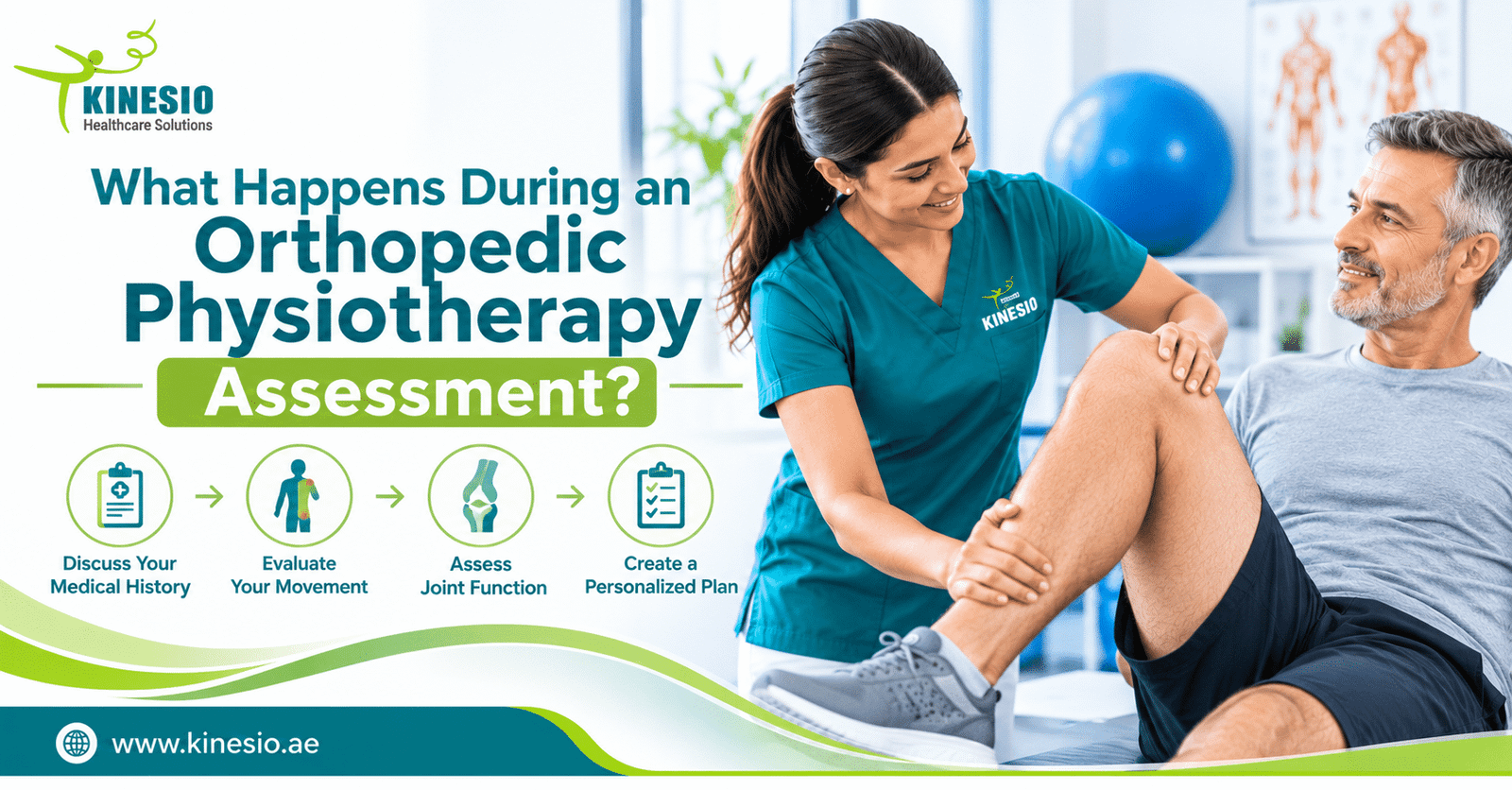
Good treatment starts with a good diagnosis. A thorough musculoskeletal assessment usually takes 45 to 60 minutes and covers five steps:
- History. When the pain started, what makes it better or worse, your training load, work set-up, past injuries and goals.
- Movement screening. Watching how you squat, lunge, bend, reach or run to see where movement breaks down.
- Joint and muscle testing. Range of motion, strength, flexibility and specific orthopedic tests for ligaments, tendons and nerves.
- Palpation. Feeling the tissues to find areas of tension, swelling or tenderness.
- Plan and explanation. A clear explanation of what is going on, how long recovery should take and what you can keep doing in the meantime.
Scans are not always needed. Guidance from the UK’s National Institute for Health and Care Excellence (NICE) on low back pain, for example, advises against routine imaging unless the result would change treatment. A good physio will refer you to a doctor for imaging when it is genuinely needed, and explain why when it is not.
How Orthopedic Physio Care Works
The strongest evidence in musculoskeletal care points to active treatment. NICE guidance on low back pain, for example, recommends exercise as a core treatment and says hands-on techniques such as manipulation or massage should be used alongside exercise, not on their own. A modern orthopedic physio Dubai plan therefore blends:
- Therapeutic exercise. Targeted strength, mobility and control work, progressed week by week.
- Manual therapy. Joint mobilisation and soft-tissue work to ease pain and restore movement.
- Dry needling. Used for tight, painful trigger points in muscles.
- Kinesio taping. Supports joints and muscles while you stay active.
- Sports massage. Helps recovery during heavy training blocks.
- Postural education. Fixes the desk and lifting habits that feed recurring pain.
The four stages of sports injury rehabilitation
- Calm it down. Reduce pain and swelling, protect healing tissue and keep you moving within safe limits.
- Restore movement. Regain full range of motion and normal walking, reaching or bending.
- Build strength and control. Progressive loading until the injured side matches the healthy side.
- Return to sport. Sport-specific drills such as running, jumping, cutting and racquet work, then a gradual return to full training.
Stage four is where many people cut corners, and it is where re-injury happens. Our dedicated sports injury rehabilitation programme treats it as seriously as the first three.
Injury Recovery: How Long Does It Take?
Every injury recovery is different, and good clinics judge progress by tests, not just the calendar. Your timeline depends on the tissue involved, how severe the injury is, your age, sleep, training history and how consistently you do your home exercises.
ACL reconstruction is a well-studied example. A Delaware-Oslo cohort study published in the British Journal of Sports Medicine found that each month athletes delayed their return to sport, up to nine months after surgery, cut their re-injury rate by 51%. Those who passed objective strength and hop tests before returning had far fewer re-injuries than those who did not. The lesson applies to most injuries: rushing back is the biggest risk, and objective testing is the best protection.
When to see an orthopedic physio
Book an assessment if:
- Pain has lasted more than a week or keeps returning when you train.
- You’ve changed how you run, lift or play to avoid pain.
- A joint feels unstable, locks, clicks painfully or gives way.
- You have stiffness every morning that takes a long time to ease.
- You’ve been told you need surgery, or have just had it.
Seek urgent medical care first if you have severe swelling after a fall, cannot bear weight, notice numbness or weakness spreading down a limb, or have back pain together with loss of bladder or bowel control.
How to Choose an Orthopedic Physio in Dubai
Not all physiotherapy Dubai clinics work the same way. Check these five things before you book:
- DHA licensing. Every physiotherapist practising in Dubai must hold a Dubai Health Authority professional licence, and the clinic itself must be a DHA-licensed facility. Ask to see it.
- Musculoskeletal and sports experience. Look for therapists who regularly treat active adults and athletes, not only post-operative or elderly patients.
- A thorough first assessment. If treatment starts within five minutes of arriving, the diagnosis is probably a guess.
- An active plan. You should leave each session knowing which exercises to do and why. Passive treatment alone rarely fixes the problem.
- Clear goals and timelines. A good physio tells you what success looks like and roughly when to expect it.
Why Active Adults Choose Kinesio
Kinesio Healthcare Solutions is a physiotherapy and rehabilitation clinic in Dubai Media City, focused on musculoskeletal conditions, sports injuries and long-term mobility. Patients come to us from Dubai Marina, Al Barsha, Jumeirah, Business Bay and Downtown.
- Orthopedic physio Dubai care built around you, from the first musculoskeletal assessment to your return to sport.
- A full toolkit under one roof: manual therapy, exercise rehab, dry needling, taping, sports massage and post-surgery rehabilitation.
- Experienced clinicians. Meet our physiotherapy team, led by Senior Physiotherapist Dr. Umul Khair.
- Care beyond sport, including women’s health, neurological and geriatric physiotherapy.
Read what patients say in our reviews, then book a free consultation and take the first step back to pain-free training.
Frequently Asked Questions
What does an orthopedic physio in Dubai treat?
Injuries and conditions of the muscles, bones, joints, tendons and ligaments. That includes sprains, strains, tendon pain, back and neck pain, sports injuries, arthritis and rehabilitation after orthopedic surgery.
Do I need a doctor’s referral for physiotherapy in Dubai?
You can usually book a physiotherapy assessment directly. Some insurance policies ask for a doctor’s referral before they will cover sessions, so check your policy before your first visit.
How many sessions will I need?
It depends on the injury. Minor strains may settle in a few sessions, while post-surgical rehab can take several months. Your physio should give you an estimate after the musculoskeletal assessment and review it as you progress.
Is sports injury rehabilitation only for athletes?
No. Anyone who wants to get back to running, gym training, padel, hiking or simply playing with their kids benefits from the same structured approach.
Can physiotherapy help me avoid surgery?
For many musculoskeletal problems, a structured exercise programme is the first-line treatment, and some people never need surgery. Where surgery is needed, rehab before and after the operation improves recovery.
What should I wear to my first appointment?
Comfortable clothes that let your physio see and move the painful area, such as shorts for knee or hip problems and a vest top for shoulders. Bring any scans or reports you already have.
Final Word
Staying active in Dubai should not mean living with pain. The right orthopedic physio finds the cause, builds your strength back and gets you returning to sport with confidence. If something has been holding you back, talk to the Kinesio team today.