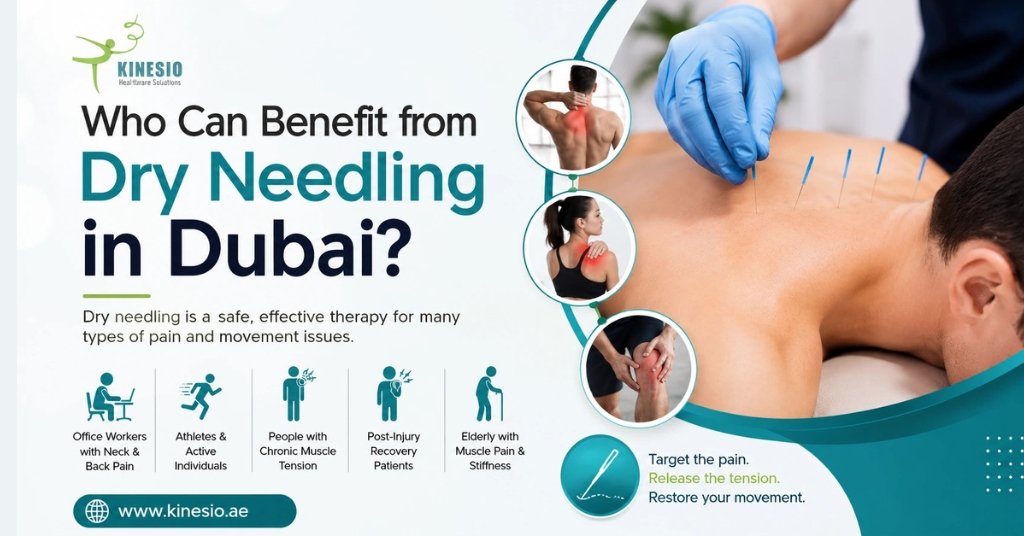
All types of people can experience muscle pain or tight muscles, no matter how active or sedentary they are. Athletes can be injured from sports, office workers can develop pain in the neck, and some people can have chronic muscle pain. All of these people can benefit from the same solution: dry needling. It is a treatment option which has garnered a lot of attention and is able to relieve pain and improve the range of motion of patients.
Many rehabilitation and physical therapy clinics in Dubai have begun to offer dry needling therapy in dubai as part of their treatment methods. As a client or potential client, you may be wondering how and to whom this treatment is applicable. This article seeks to identify the conditions that dry needling can treat and the many advantages of this service. It will also describe the treatment and inform you of the best candidate for this type of therapy.
What Is Dry Needling?
As a type of physical therapy, dry needling entails the use of very fine, sterile needles to engage and puncture tight muscles and (myo)fascial trigger points. The purpose of this is to decrease taut muscle and needle point pain, while enhancing blood flow and reinstating functional motion.
Because there are no medications placed in the needle, the dry needling process relies on stimulating the muscle to help it relax and kick-start the healing process.
To provide dry needling therapy in Dubai, a physical therapist must be licensed and have completed further specialized training to perform this treatment.
How Does Dry Needling Work?
For many reasons, muscles can develop points that are sensitive and become triggers. This can be caused by things such as injury, repetitive movements, or poor posture and can result in the pain being localized, but then radiating to other parts of the body.
Trigger points may experience the following once a needle has been inserted into it:
- Decreased tautness of the muscle
- Increased blood flow
- Deciphered pain signals
- Restoration of the muscle and its function
- Range of motion and mobility could be improved.
For optimal effectiveness, dry needling is typically combined with stretching, strengthening, and manual therapy.
Who Can Use Dry Needling?
This treatment is mainly beneficial for those with musculoskeletal pain.
Office Employees
Sitting at a desk for an extended period can result in:
- Neck and shoulder pain
- Back pain
- Headaches
Dry needling can help ease tension of the muscles caused by working at a desk.
Athletes
Muscles and tissues that are stressed from repetitive use in a sport often leads to the need for dry needling therapy in Dubai to assist with:
Muscle tightness
Fatigue
Injuries
Poor flexibility
Recovery from sports and improvement of function can be aided through dry needling.
People who have Chronic Pain
Muscular pain that is chronic can be improved with dry needling in conjunction with physiotherapy. Conditions that are frequently improved through this method of therapy can include:
- Chronic neck, shoulder, and back pain
- Hip pain
- Muscle spams
- Myofascial pain syndrome
People who have Recently Injured Muscles
Muscles that have been injured can be dry needled to assist recovery from:
- Muscle strains
- Injuries to ligaments and tissues
- Joints
- Surgery
Active People who are Older
Muscle stiffness and decreased flexibility is common with aging. Dry needling can help improve:
- Mobility of joints
- Muscle flexibility
- Comfort while walking
- Daily functional movements
Therapies are individualized based on the patient’s health status and physical condition.
Commonly Treated Conditions
Musculoskeletal disorders are the most common condition treated with dry needling.
These conditions are examples of:
- Neck pain
- Back pain
- Shoulder impingement
- Rotator cuff injury
- Tennis elbow
- Golfer’s elbow
- Hip pain
- Knee pain
- Plantar fasciitis
- Sciatica
- Muscle spasm
- Tension headache
- Myofascial pain syndrome
Physiotherapists only consider dry needling following a comprehensive assessment.
Potential Benefits
After dry needling, many patients report improvements. Dry needling may offer the following potential benefits:
Pain Relief
Improving or relieving pain, discomfort, or irritation from muscle may be achieved by relieving tension by targeting trigger points.
Improved Ability to Move
Once joints may be able to move more freely, this may be a result of relaxing tight muscles.
Reduced Muscle Tightness
Trigger point treatment may be beneficial to muscles that have tension or tightness that is prolonged.
Improved Athletic Ability
Treatment may improve athletic ability by improving flexibility, muscle activation, and the efficiency of movement.
What Should I Expect During My Treatment?
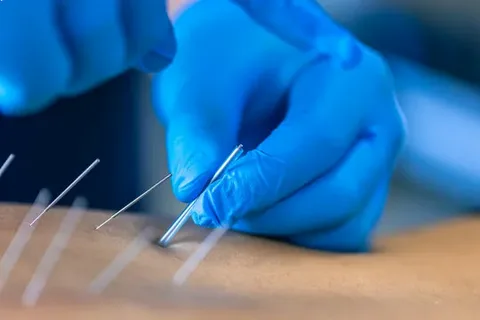
Your physiotherapist will do a thorough evaluation to identify the cause of your symptoms. During your treatment session:
- The area of concern is assessed.
- Muscle trigger points are located.
- Muscle is penetrated with fine hollow needles.
- The needles are either left in place for a short time or may be repositioned.
- Other physiotherapy methods may be added to treatment.
Your treatment session may last from 30-60 minutes.
Is Dry Needling Painful?
Most people feel little to no pain during treatment. Some of the things you may feel during treatment include:
- A little pinching sensation.
- A muscle twitch.
- Some soreness that will be temporary.
The soreness you feel after treatment should go away in 24-48 hours. This is expected.
Is Dry Needling Safe?
dry needling therapy in dubai as an intervention is safe when used on a patient by a licensed physiotherapist using a sterile needle.
The side effects you might experience are:
- Muscle soreness
- Bruising
- Tiredness
- Soreness in the muscles
Your physiotherapist will screen your medical profile to see if dry needling is a safe intervention for you.
Dry Needling vs. Acupuncture
Both dry needling and acupuncture involve the use of fine needles. However, the origins of the two procedures are completely different.
While acupuncture is the placement of needles to aid in the TCM concept of restoring energy in the body, dry needling is the placement of needles in:
- Myofascial trigger points
- Muscle pain
- Pain
- Rehab
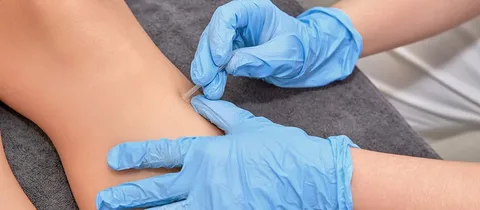
Physiotherapy and Dry Needling
Dry needling therapy in dubai on its own is not a complete intervention and is most useful in conjunction with other rehabilitation techniques.
Other physiotherapy interventions include:
- Manual therapy
- Stretching and strengthening
- Posture and mobility rehab
- Functional rehabilitation
- Exercises prescribed to be done at home
The clinics offering dry needling physiotherapy Dubai usually integrate multiple techniques in order to rehabilitate and to minimize the chances of pain.
Advanced Dry Needling Techniques
Muscle trigger point Dry needling therapy in dubai is advanced dry needling, and it is a technique used to relieve pain and restore movement to a muscle by inserting a needle into a muscle knot.
Another advanced technique is offering home stroke rehab physiotherapy. The home service is used to improve the patients range of motion and strengthen the patients balance and overall rehabilitation to a more advanced level of personal and improved daily living and mobility.
Targeted pain relief for musculoskeletal issues may include dry needling therapy in Dubai as part of a specialized rehabilitation program.
Who Is Dry Needling Not Recommended for?
Not everyone is an appropriate candidate for dry needling. Your physiotherapist will offer other options if you:
- Suffer from some bleeding disorders
- Take some anticoagulants
- Have an infection
- Have an extreme case of anxiety towards needles
- Lack the capacity to give informed consent
A thorough medical history allows your physiotherapist to the safe alternative.
Recommendations After Dry Needling
You can support your recovery after treatment by:
- Drinking significant amounts of water
- Doing your prescribed stretches
- Not doing any vigorous exercise for the rest of the day
- Keeping your movement light
- Doing any exercise your physiotherapist prescribed
Most patients are able to perform their normal routines shortly after treatment.
Conclusion
For patients with muscle pain, muscle stiffness, restricted range of motion, sports injuries, etc., dry needling therapy in Dubai is an appropriate adjunct to a physiotherapy program. Dry needling therapy is a proven technique that decreases muscle pain and improves range of motion, and increases recovery.
If that is you, or you are a sports client looking to improve your performance, or you are an office client that has postural problems, or you are a client that is recovering from an injury, dry needling can improve your quality and level of function when used in combination with other therapies.
FAQs
1. What issues can be treated with dry needling?
In general, dry needling can treat a wide variety of issues, including: tight muscles, neck pain, back pain, shoulder pain, injuries sustained from sports, tension headaches, myofascial pain syndrome, and many other musculoskeletal injuries that involve the use of trigger points.
2. Is dry needling similar to acupuncture?
No, they are two different techniques. While they both involve inserting a fine needle, dry needling focuses on modern anatomy and physiology when locating muscle trigger points and applying treatment. Acupuncture is based on ancient Chinese medicine.
3. How many dry needling treatments will I require?
This will be contingent on the severity of your symptoms and the goals you have set for your treatment. For some patients, dry needling has been effective in 1-2 sessions, while others have required more sessions as part of a comprehensive physiotherapy.
4. What are the risks associated with dry needling?
Post dry needling treatment, a patient can expect mild muscle soreness, bruising, and tenderness that is temporary. These symptoms are typically experienced for a day or two after treatment.
5. Are other physiotherapy treatments combined with dry needling?
Yes. Usually dry needling is used along with manual therapy, stretching, strengthening exercises, rehabilitation programs, and posture correction, in order to achieve the best outcome for a patient.