When you are dealing with joint pain, a sports injury, muscle weakness or difficulty moving comfortably, choosing the right type of physiotherapy can feel confusing. Some clinics advertise general physiotherapy, while others highlight orthopedic rehabilitation or musculoskeletal physiotherapy.
So, what is the difference?
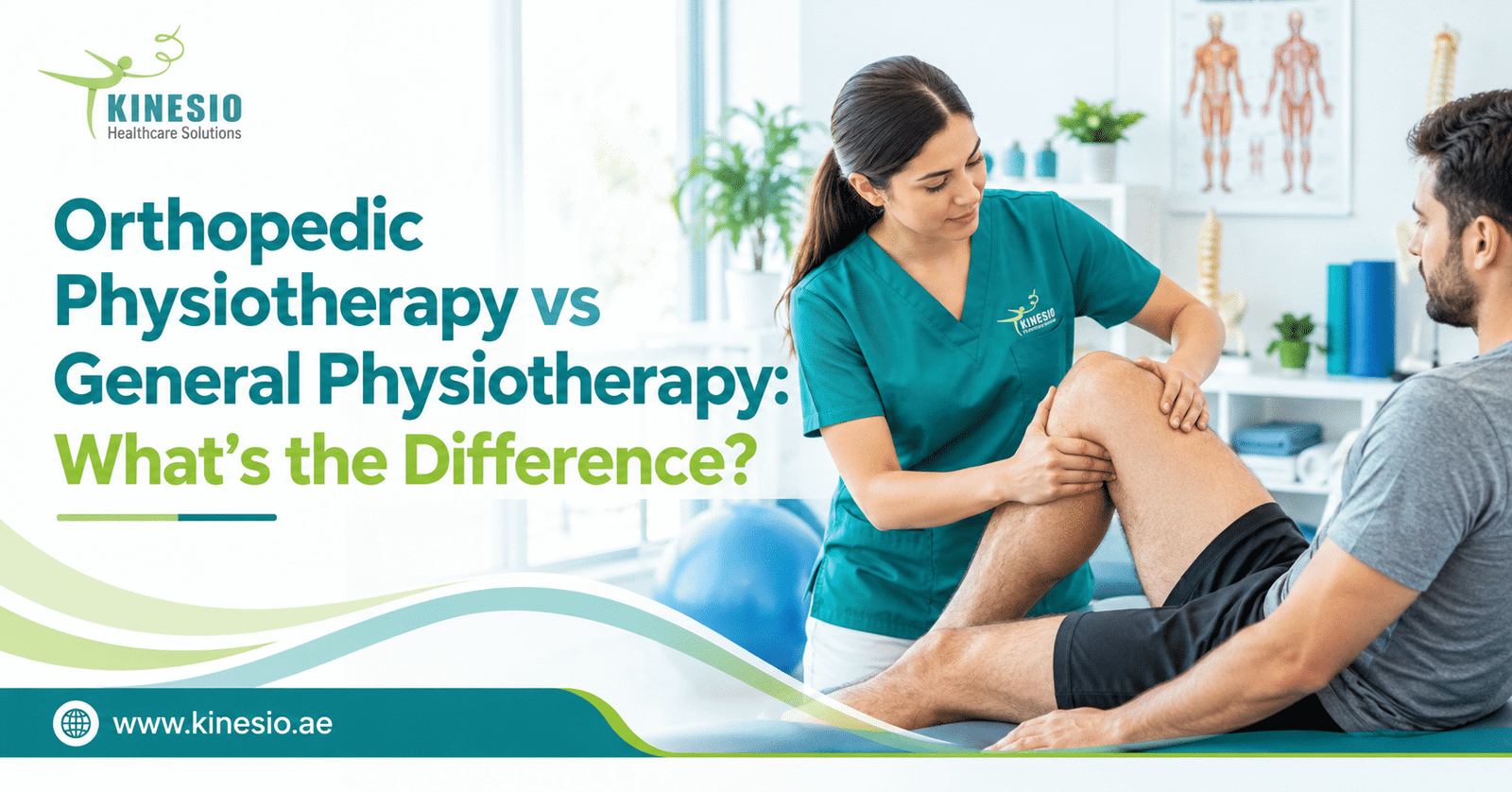
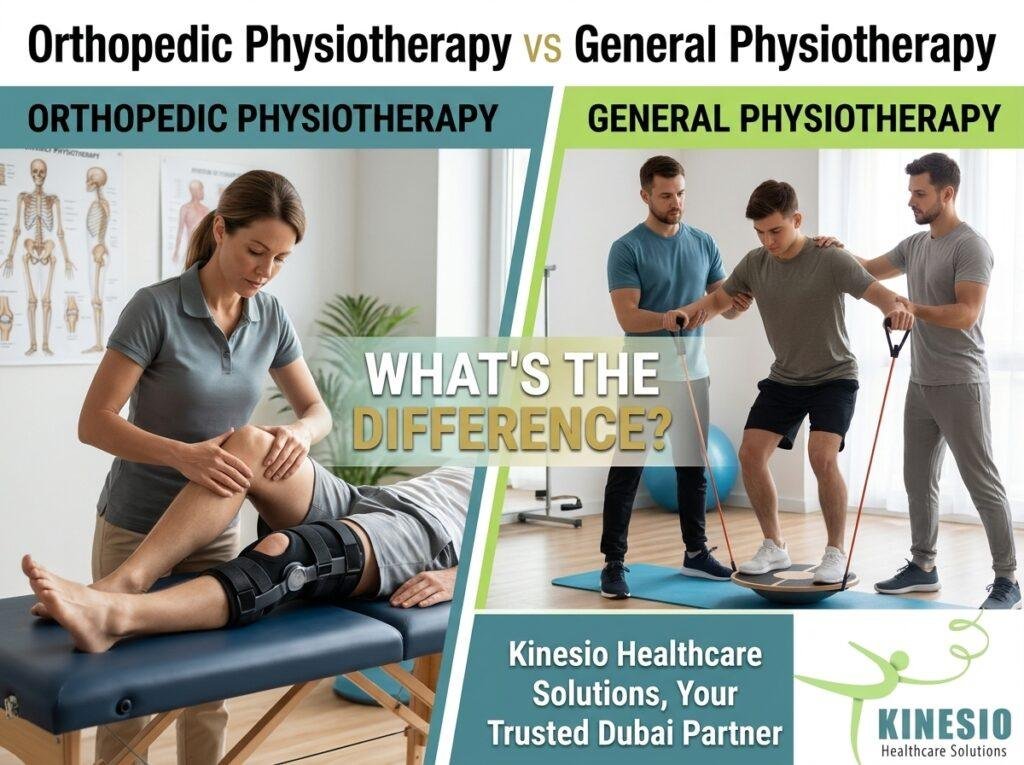
General physiotherapy is the broader healthcare profession, while orthopedic physiotherapy focuses specifically on musculoskeletal problems involving muscles, bones, joints, tendons and ligaments. The two overlap considerably because general physiotherapists may also treat musculoskeletal conditions. The main difference is usually the clinician’s area of focus, experience and the type of rehabilitation you need.
For example, someone recovering from a knee injury may benefit from orthopedic physiotherapy. A person rebuilding walking and balance after a stroke may require neurological physiotherapy. Someone recovering from certain respiratory or cardiac conditions may need cardiopulmonary rehabilitation.
For people searching for orthopedic and physiotherapy services in Dubai, understanding these distinctions can help make the first appointment more appropriate.
At Kinesio Healthcare Solutions, physiotherapy and rehabilitation services include musculoskeletal and orthopedic physiotherapy, sports injury rehabilitation, neurological physiotherapy, cardiopulmonary physiotherapy and other areas of care. Treatment should be matched to the individual’s condition, physical abilities and recovery goals.
What Is General Physiotherapy?
Physiotherapy is a healthcare profession focused on human movement, physical function and rehabilitation.
Physiotherapists help people manage movement difficulties associated with injuries, illness, disability, surgery and other health conditions. Depending on their training, clinical experience and area of practice, they may work with people of different ages and with a wide range of physical needs.
The international professional organisation World Physiotherapy explains that physiotherapists assess movement and function, develop treatment plans, implement interventions, evaluate outcomes and advise people on self-management.
Source: World Physiotherapy — What Is Physiotherapy?
General physiotherapy can involve several areas of practice, including:
- Musculoskeletal physiotherapy for joint, muscle and movement problems
- Neurological physiotherapy for conditions affecting the nervous system
- Cardiopulmonary physiotherapy for selected heart and lung conditions
- Paediatric physiotherapy for children’s movement and developmental needs
- Geriatric physiotherapy for mobility, strength and physical function in older adults
- Women’s health physiotherapy for appropriate pelvic health and related conditions
- Sports physiotherapy for injury rehabilitation and return to sport
Not every clinic offers every service, and individual physiotherapists may focus on particular clinical areas.
This is why the word “general” does not automatically mean that the treatment is basic or less effective. It may simply describe a broader service offering.
What Is Orthopedic Physiotherapy?
Orthopedic physiotherapy is a focused area of physiotherapy concerned with musculoskeletal conditions.
The musculoskeletal system includes the structures that help the body move and remain stable, including bones, muscles, joints, tendons, ligaments and surrounding connective tissues.
An orthopedic physiotherapist may assess people with:
- Joint pain and stiffness
- Muscle strains and weakness
- Sports injuries
- Tendon and ligament problems
- Overuse injuries
- Reduced mobility
- Certain arthritis-related problems
- Fracture rehabilitation after appropriate medical treatment
- Recovery after orthopedic surgery
- Movement limitations following injury

The treatment plan depends on the person’s condition and assessment findings. It may include strengthening, mobility exercises, functional movement training, education, manual therapy when appropriate and a progressive return to everyday activities.
At Kinesio Healthcare Solutions, the Musculoskeletal & Orthopedic Physiotherapy service covers conditions such as sports injuries, overuse injuries, spinal problems, joint pain, muscle weakness and post-surgical rehabilitation.
The focus is on understanding how the condition affects movement and function, rather than selecting treatment based only on the location of pain.
Orthopedic Physiotherapy vs General Physiotherapy: Key Differences
The following comparison provides a practical overview.
| Feature | General physiotherapy | Orthopedic physiotherapy |
|---|---|---|
| Scope | Broad range of movement and rehabilitation needs | Primarily musculoskeletal conditions |
| Common concerns | Depends on the clinician’s practice area | Joint pain, muscle injuries, sports injuries and orthopedic recovery |
| Assessment | Based on the person’s condition and goals | Focuses on musculoskeletal function and related limitations |
| Treatment | May include exercise, education, manual therapy and condition-specific rehabilitation | May include strengthening, mobility work, functional training and orthopedic rehabilitation |
| Examples | Neurological, cardiopulmonary, paediatric or musculoskeletal care | Knee rehabilitation, shoulder recovery, muscle strains and post-surgical rehabilitation |
| Who may benefit | People with a wide range of movement and physical-function needs | People whose main problem involves the musculoskeletal system |
These categories are not mutually exclusive. Orthopedic physiotherapy is part of the wider field of physiotherapy, and many physiotherapists work across more than one area.
A more useful question than “Which is better?” is “Which clinician has the right experience for my condition?”
Is Orthopedic Physiotherapy Better Than General Physiotherapy?
Neither is automatically better.
Orthopedic physiotherapy may be the more relevant choice when your main concern involves a joint, muscle, tendon, ligament or orthopedic injury. However, a physiotherapist who offers general services may also have significant musculoskeletal expertise.
The service name alone does not establish the quality of care.
For example, someone with a knee injury should look for a clinician who can appropriately assess and rehabilitate that problem. A person recovering from a stroke may need a clinician experienced in neurological rehabilitation instead.
The appropriate choice depends on:
- Your symptoms and medical history
- The likely cause of the problem
- The activities you are struggling with
- The clinician’s qualifications and experience
- The treatment and rehabilitation services available
- Whether another healthcare professional needs to be involved
World Physiotherapy’s guidance on professional standards highlights the importance of competence, qualifications, clinical experience and the ability to practise safely within an individual’s area of expertise.
Source: World Physiotherapy — Standards of Physiotherapist Practice
When Should You Choose Orthopedic Physiotherapy?
Orthopedic physiotherapy may be appropriate when pain, stiffness, weakness or an injury is affecting your movement.
You Have Joint Pain
If your knee hurts while climbing stairs, your shoulder is uncomfortable when reaching overhead, or your hip makes walking difficult, a musculoskeletal assessment may help determine the next step.
Joint pain has several possible causes. Treatment should be based on the assessment rather than assuming every painful joint needs the same exercises.
You Have a Sports Injury
Sports injuries can affect movement and strength even after the initial pain begins to settle.
An ankle sprain, muscle strain or tendon problem may require a progressive rehabilitation programme before you return to your usual training.
Orthopedic or sports physiotherapy can help assess movement, strength and functional limitations and guide an appropriate return to activity.
You Are Recovering After Surgery
After an orthopedic procedure, rehabilitation may be required to restore movement, strength and confidence.
The plan must follow the surgeon’s instructions and account for the procedure, the stage of healing and any restrictions.
Someone recovering from a knee replacement, for example, will not necessarily follow the same rehabilitation plan as someone recovering from shoulder surgery.
You Have Persistent Musculoskeletal Symptoms
If pain or stiffness continues to affect your normal routine, an assessment may help establish what is limiting your function.
This does not automatically mean that the problem is serious. It means there may be value in understanding why the symptoms persist and what can be done safely.
When Might General Physiotherapy Be More Appropriate?
General physiotherapy may be appropriate when your needs fall outside a primarily orthopedic focus or when you are unsure which area of physiotherapy fits your condition.
Depending on the clinic’s services and the clinician’s expertise, this may include several areas of rehabilitation.
Neurological Rehabilitation
Conditions affecting the nervous system can change movement, balance, coordination, strength and independence.
People recovering from a stroke, for example, may require neurological physiotherapy rather than orthopedic care alone.
Cardiopulmonary Rehabilitation
Some patients need physiotherapy related to heart or lung conditions, exercise tolerance or breathing-related limitations.
The approach differs from routine orthopedic rehabilitation and should be delivered by appropriately trained clinicians.
Paediatric Physiotherapy
Children may need assessment or rehabilitation for movement and developmental concerns.
Treatment should account for the child’s age, needs and developmental stage.
Geriatric Physiotherapy
Older adults may benefit from physiotherapy focused on mobility, strength, balance and maintaining independence, depending on their condition.
Some may need musculoskeletal care, while others require a broader assessment of mobility and physical function.
Women’s Health Physiotherapy
Women’s health physiotherapy addresses selected conditions involving pelvic health and related functional concerns. It requires relevant clinical knowledge and an appropriate assessment.
The important point is that general physiotherapy does not necessarily mean one therapist treats every condition. Always confirm that the provider offers care relevant to your needs.
Kinesio Healthcare Solutions lists neurological, cardiopulmonary, paediatric, geriatric and women’s health physiotherapy alongside musculoskeletal and orthopedic services.
You can review the clinic’s physiotherapy and rehabilitation services.
What Is a Physiotherapy Assessment?
Whether you choose general physiotherapy or orthopedic physiotherapy, an individual assessment should guide the treatment plan.
The first appointment commonly begins with a discussion about your symptoms, medical history, daily routine and goals.
Your physiotherapist may ask:
- When did the problem begin?
- Was there a specific injury?
- Which movements make it worse?
- What activities have become difficult?
- Have you had similar symptoms before?
- Are you recovering from surgery?
- What do you want to return to doing?
The physical assessment depends on the condition.
For a musculoskeletal problem, it may include range of movement, muscle strength, balance, functional movements and relevant clinical tests.
For another condition, the assessment may need to focus on different areas of physical function.
The information helps the physiotherapist decide whether treatment is appropriate, which approaches may be useful and whether a medical referral or additional investigation is needed.
The first appointment should not simply be a routine sequence of treatments applied without understanding the patient’s condition.
What Treatment Methods Are Used?
Physiotherapy is not one single technique. Treatment depends on the patient’s goals and clinical findings.
Exercise Therapy
Exercises may be used to develop strength, improve mobility, train balance or help the patient regain functional movement.
For orthopedic conditions, the programme may focus on the joint, muscles and activities affected by the problem.
Manual Therapy
Hands-on techniques may be used in selected situations to help manage symptoms or movement restrictions.
Their role should be explained within the wider treatment plan rather than presented as a complete solution for every problem.
Functional Rehabilitation
Functional exercises focus on movements that matter in everyday life.
These could include walking, stepping, standing from a chair, lifting or tasks related to work and sport.
Education and Self-Management
People may receive guidance on managing activity, following home exercises and understanding what to expect during recovery.
Condition-Specific Rehabilitation
Some patients need programmes tailored to neurological, cardiopulmonary, paediatric or other clinical needs.
The appropriate treatment approach reflects the clinician’s scope of practice and the patient’s condition.
Orthopedic Physiotherapy and Physical Therapy: Are They the Same?
Yes, in many countries, the terms physiotherapy and physical therapy describe the same broad healthcare profession.
World Physiotherapy notes that physiotherapists are called physical therapists in many countries. The terminology differs, but the profession focuses on movement and functional ability.
Source: World Physiotherapy — What Is Physiotherapy?
The expression “orthopedic physical therapy” is commonly used in some countries to describe musculoskeletal rehabilitation. “Orthopedic physiotherapy” is a familiar equivalent in many other settings.
For people searching online, the important distinction is not the wording alone. It is the clinician’s actual training, experience, professional registration and relevance to the condition being treated.
If a clinic lists orthopedic and physiotherapy services separately, ask how those services differ and which one is suitable for your particular situation.
Orthopedic Physiotherapy vs an Orthopedic Doctor
It is also important not to confuse an orthopedic physiotherapist with an orthopedic doctor.
An orthopedic doctor is a medical practitioner who assesses and manages musculoskeletal conditions within their medical scope. Depending on the problem, their role may involve diagnosis, medical treatment, imaging decisions, injections or surgery.
A physiotherapist assesses movement and physical function and provides rehabilitation within their professional scope.
These clinicians can have complementary roles.
For example, an injury may first require medical assessment to establish the diagnosis or determine whether a fracture or significant structural injury is present. Physiotherapy may then form part of the rehabilitation plan.
In other cases, a physiotherapy assessment may be an appropriate first step for a gradual movement problem, with referral for medical evaluation if necessary.
Severe pain after significant trauma, an obvious deformity, inability to bear weight or other concerning symptoms should receive prompt medical assessment rather than being managed through routine rehabilitation alone.
How to Choose the Right Physiotherapy Service in Dubai
When searching for physiotherapy Dubai services, start by identifying the main problem you want help with.
If your concern involves joint pain, a muscle injury, a sports injury or orthopedic recovery, look for a physiotherapist with relevant musculoskeletal experience.
Before booking, consider asking:
Does the clinic assess my type of problem?
Is the physiotherapist appropriately qualified and licensed to practise in Dubai?
Will the treatment plan be personalised?
Will progress be reviewed?
What does the initial appointment cost, and what does it include?
Will I need a medical referral or insurance approval?
These questions can help you compare clinics without relying solely on advertising claims or a long list of available treatments.
The Dubai Health Authority provides official resources for healthcare facilities and professionals. You can start with the DHA website to find relevant registration and verification services.
A clinic should also explain when your problem falls outside its scope and when another healthcare professional may be needed.
How Kinesio Healthcare Solutions Approaches Physiotherapy in Dubai
Kinesio Healthcare Solutions is a physiotherapy and rehabilitation clinic located at Arjaan by Rotana in Dubai Media City.
Its service offering includes musculoskeletal and orthopedic physiotherapy, sports injury rehabilitation, neurological physiotherapy, cardiopulmonary physiotherapy, paediatric and geriatric physiotherapy, women’s health, sports massage, dry needling, Kinesio taping and postural education.
This range reflects the fact that physiotherapy covers multiple areas and that different patients require different approaches.
For someone with a musculoskeletal concern, the Musculoskeletal & Orthopedic Physiotherapy service is the most relevant starting point.
For broader information about the clinic and its services, visit Kinesio Healthcare Solutions.
The best service to book depends on your condition. If you are unsure, describe your symptoms and goals to the clinic so the team can advise you on the appropriate appointment pathway.
Frequently Asked Questions
What is the difference between orthopedic physiotherapy and general physiotherapy?
General physiotherapy is the broader profession, while orthopedic physiotherapy focuses on musculoskeletal conditions affecting muscles, bones, joints, tendons and ligaments. Many general physiotherapists also manage musculoskeletal problems.
Is orthopedic physiotherapy better for joint pain?
Orthopedic physiotherapy may be especially relevant when joint pain is the main concern. However, the clinician’s experience and the underlying cause of the symptoms matter more than the service label alone.
Does general physiotherapy include musculoskeletal physiotherapy?
Yes. Musculoskeletal care is one of the areas within physiotherapy. A general physiotherapy service may include it, although the range of conditions treated varies by clinic and clinician.
What conditions does orthopedic physiotherapy treat?
It may help people with joint pain, muscle injuries, sports injuries, tendon or ligament problems, stiffness and rehabilitation needs following orthopedic surgery. Suitability depends on the individual’s diagnosis and assessment.
What is a physiotherapy assessment?
A physiotherapy assessment involves discussing symptoms, medical history, physical limitations and goals, followed by relevant examinations of movement and function. The results help guide the treatment plan.
Are physical therapy and physiotherapy the same?
The terms are used for the same broad profession in many countries. Regional terminology differs, so patients should check the clinician’s qualifications and scope of practice.
Should I see a physiotherapist or an orthopedic doctor first?
It depends on your symptoms. Persistent movement problems may be suitable for physiotherapy assessment, while major trauma, suspected fracture, severe symptoms or concerning neurological changes may require medical assessment first.
Can orthopedic physiotherapy help after surgery?
Yes. It can be part of rehabilitation after selected orthopedic procedures. The programme should follow the surgeon’s instructions and account for the specific operation and stage of healing.
How many physiotherapy sessions will I need?
There is no fixed number. The appropriate number depends on the condition, severity, goals and progress. Your physiotherapist can discuss a more realistic plan after assessment.
Where can I find orthopedic physiotherapy in Dubai?
Kinesio Healthcare Solutions provides musculoskeletal and orthopedic physiotherapy in Dubai Media City. Review the orthopedic physiotherapy service page for further information.
Final Thoughts
The difference between orthopedic physiotherapy and general physiotherapy is mainly a matter of clinical focus.
General physiotherapy covers a broad range of movement and rehabilitation needs. Orthopedic physiotherapy concentrates on musculoskeletal problems involving joints, bones, muscles, tendons and ligaments.
Neither option is automatically better. The most appropriate choice depends on the condition, the clinician’s expertise and the rehabilitation required.
For people in Dubai, understanding the distinction can help narrow the choices when looking for physiotherapy, physical therapy or orthopedic rehabilitation.
Kinesio Healthcare Solutions provides a range of physiotherapy and rehabilitation services, including musculoskeletal and orthopedic care. A suitable assessment can help determine which approach is relevant to your symptoms and goals.
Ultimately, the best starting point is a clinician who understands your condition, explains the available options and works with you toward practical improvements in movement and everyday function.
Author: Kinesio Healthcare Solutions Editorial Team
This article is for general educational purposes and does not replace an individual clinical assessment or medical advice.