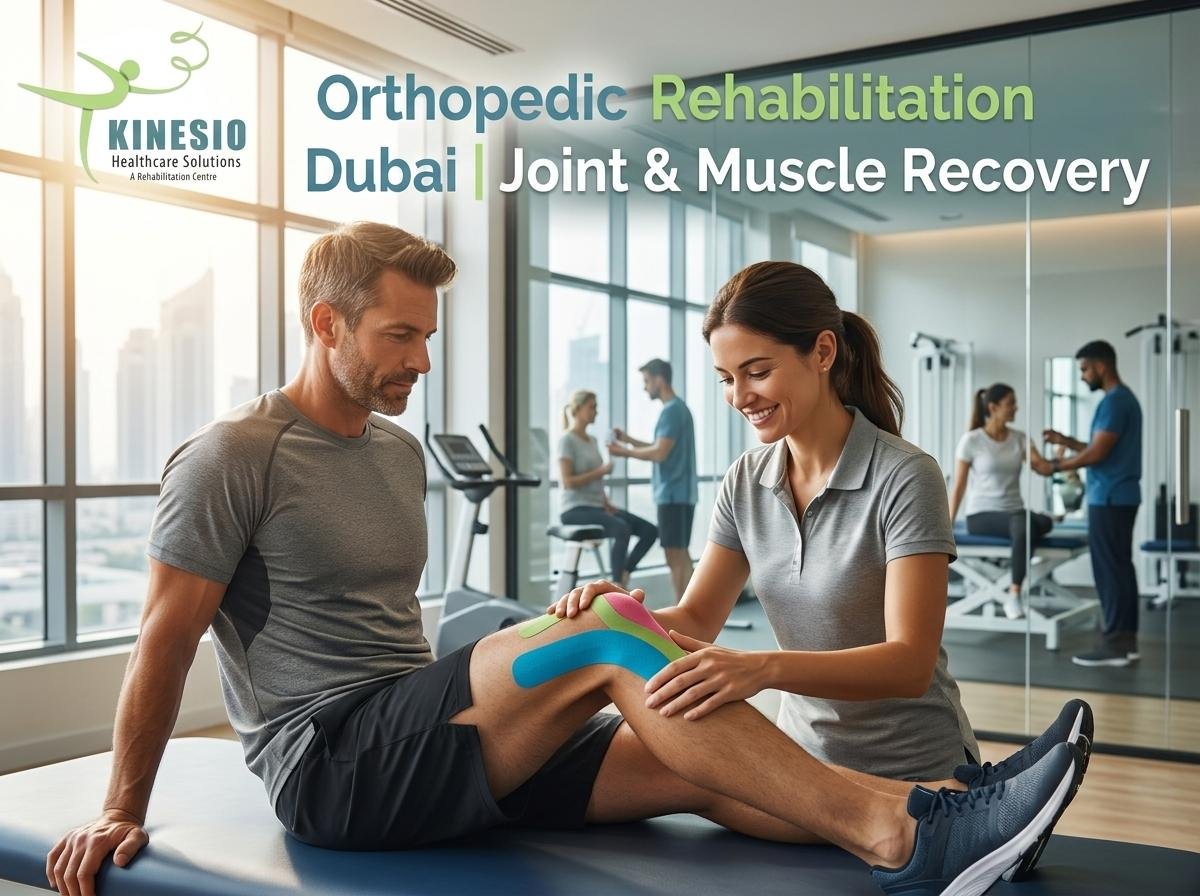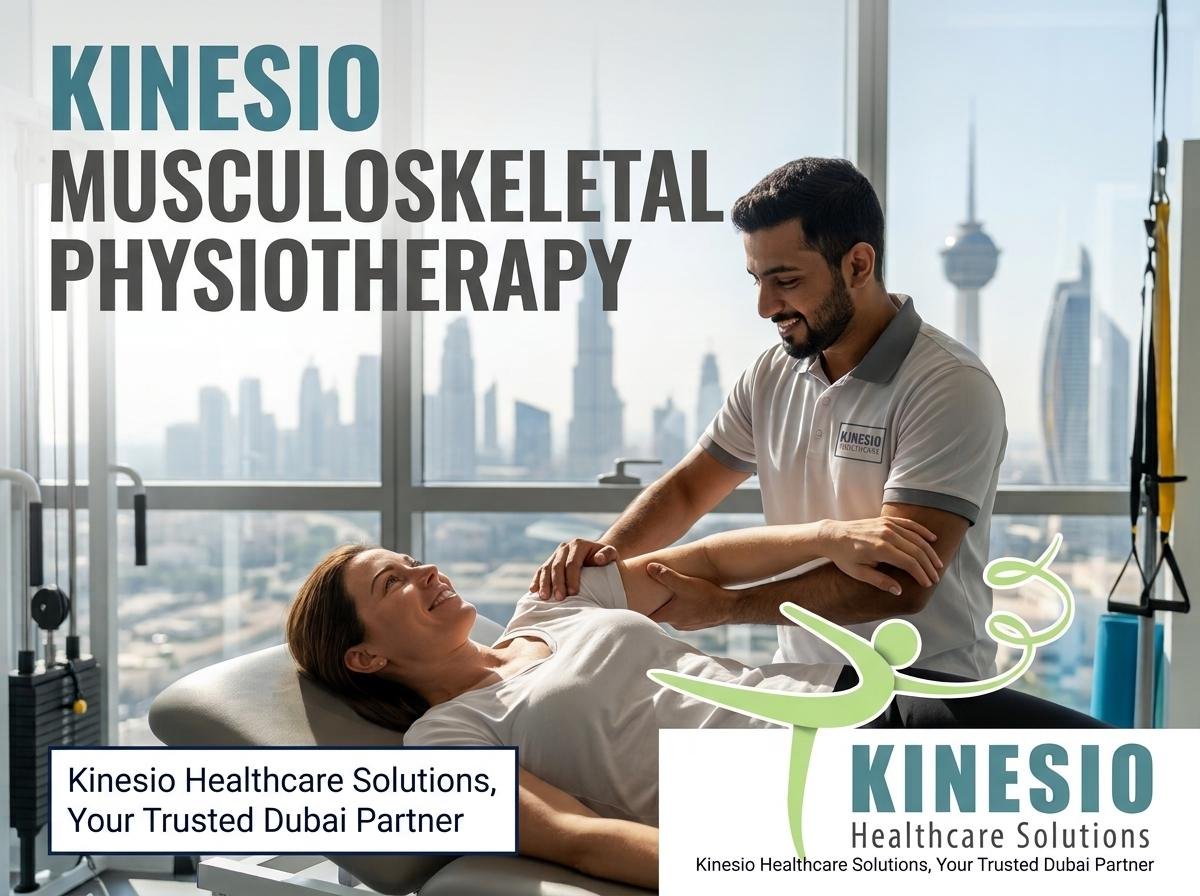
Joint pain and muscle pain often occur together. A painful knee may make the muscles around the leg work differently. A shoulder problem can affect the way you lift your arm. An ankle injury may change your walking pattern and place extra demands on other parts of the leg.
Musculoskeletal physiotherapy in Dubai helps assess and manage problems affecting muscles, joints, tendons, ligaments and movement. Depending on the underlying condition, treatment may include exercise, strength training, mobility work, movement education and other appropriate physiotherapy techniques.
The aim is to help people improve physical function, manage symptoms and return to the activities that matter to them.
For someone experiencing recurring stiffness, joint discomfort, muscle weakness or difficulty moving comfortably, understanding the relationship between muscles and joints is an important first step.
At Kinesio Healthcare Solutions, musculoskeletal and orthopedic physiotherapy is available for conditions such as joint pain, sports injuries, overuse injuries, spinal problems, muscle weakness and rehabilitation following surgery. Treatment is tailored to the patient’s condition, lifestyle and goals.
This guide explains how musculoskeletal physiotherapy works, when to consider an assessment, what treatment may involve and how rehabilitation can help people manage everyday movement problems.
What Is Musculoskeletal Physiotherapy?
Musculoskeletal physiotherapy focuses on conditions affecting the body’s movement system, including muscles, bones, joints, tendons, ligaments and surrounding connective tissues.
These structures work together whenever you walk, stand, climb stairs, lift an object, exercise or perform everyday tasks.
When one part becomes painful or restricted, it can affect how you use the rest of your body. For example, someone with knee pain may avoid bending the knee fully. Over time, this adjustment can affect walking, stair climbing and the amount of activity the person feels comfortable doing.
Musculoskeletal physiotherapy assesses these problems and develops a treatment approach based on the individual’s symptoms, physical abilities and recovery goals.
Treatment may include:
- Therapeutic exercise and strengthening
- Mobility and flexibility work
- Functional movement training
- Balance and coordination exercises
- Manual therapy when appropriate
- Advice about activity and recovery
- Home exercises
- Rehabilitation following an injury or surgery
Not every person requires all these techniques. Treatment should be selected according to the clinical assessment rather than delivered as a fixed package.
The World Health Organization identifies musculoskeletal conditions as a major contributor to disability and rehabilitation needs worldwide. These conditions can affect mobility, dexterity, work and participation in everyday life.
What Conditions Can Musculoskeletal Physiotherapy Help With?
Musculoskeletal physiotherapy may form part of the management plan for many conditions. Whether it is appropriate depends on the cause, severity and presentation of the problem.
Joint pain and stiffness
Joint symptoms can affect the knees, shoulders, hips, ankles, wrists, elbows and other areas.
People may notice discomfort when walking, bending, reaching, lifting or completing ordinary tasks.
Joint pain physiotherapy can involve assessing range of motion, strength, balance and functional movement. The treatment plan may then focus on helping the affected area tolerate movement and activity more comfortably.
For some people, this includes progressive strengthening. Others may require mobility work, balance training or rehabilitation following an injury.
Muscle pain and weakness
Muscle problems can develop after exercise, injury, repetitive loading or periods of reduced activity.
Symptoms may include tenderness, weakness, stiffness or difficulty using the affected area normally.
Muscle physiotherapy may involve carefully progressed exercises that restore strength and improve the ability to perform everyday movements.
However, muscle pain does not always mean the muscle itself is the main source of the problem. Symptoms need to be considered alongside the person’s history and assessment findings.
Tendon and ligament problems
Tendons connect muscles to bones, while ligaments help stabilise joints.
Both can be affected by injuries or repeated physical loading.
Depending on the condition, rehabilitation may involve modifying aggravating activities and gradually rebuilding strength and tolerance to loading.
Sports and overuse injuries
Running, gym training, football, tennis, padel and other sports place different demands on the body.
A sports injury may require more than waiting for discomfort to settle. Strength, movement control and tolerance for sport-specific activities may also need to improve.
Musculoskeletal physiotherapy can help assess these limitations and guide a gradual return to activity.
Recovery after surgery
Following orthopedic surgery, people may experience stiffness, reduced strength, limited movement or difficulty performing everyday activities.
Rehabilitation can help address these limitations within the restrictions and recovery plan provided by the surgical team.
Kinesio Healthcare Solutions includes sports injuries, overuse injuries, joint pain, muscle weakness and post-surgical recovery within its musculoskeletal and orthopedic physiotherapy service.
Why Do Joint Pain and Muscle Pain Often Occur Together?
The muscles and joints do not work independently. They form part of a connected movement system.
When a joint becomes painful, you may unconsciously change the way you move to reduce discomfort. This can alter the demands placed on surrounding muscles and other joints.
Consider someone who has injured an ankle.
Initially, walking may be uncomfortable. The person may put less weight on the injured side and take shorter steps. Depending on the situation, this altered movement can affect the demands placed on the opposite leg, knee or hip.
Similarly, someone with shoulder pain may avoid lifting the arm normally. Muscles around the shoulder blade and upper back may then work differently during everyday tasks.
These examples do not mean that every painful joint causes muscle dysfunction. They illustrate why a physiotherapist may assess surrounding areas instead of examining only the location of pain.
A useful assessment considers how the person moves as a whole.
When Should You Consider Musculoskeletal Physiotherapy in Dubai?
An assessment may be worthwhile when pain or stiffness begins interfering with your normal routine.
You might consider musculoskeletal physiotherapy Dubai services when:
- Pain persists or repeatedly returns
- A joint feels stiff or difficult to move
- Muscle weakness affects everyday activities
- Walking or climbing stairs becomes difficult
- Exercise repeatedly aggravates the same area
- An injury has not recovered as expected
- You are returning to activity following surgery
- Movement limitations are affecting work or sleep
- You are unsure how to resume exercise safely
A minor, short-lived ache after an unfamiliar activity may settle with sensible recovery and activity modification. However, continuing symptoms or increasing difficulty with normal movement deserve more attention.
The purpose of an assessment is to understand what might be contributing to the problem and determine whether physiotherapy is appropriate.
What Happens During a Musculoskeletal Physiotherapy Assessment?
A good treatment plan begins with understanding the person, not simply selecting a treatment technique.
During an initial assessment, the physiotherapist may ask about:
- When the symptoms started
- Whether an injury occurred
- Which movements cause discomfort
- How symptoms affect daily activities
- Previous injuries or surgery
- Your work and exercise routine
- Relevant medical history
- Your recovery goals
The physical examination may include movement, strength, balance and functional tasks, depending on your condition.
For example, a person with knee pain may be asked to perform specific movements to help the physiotherapist understand what is limited or uncomfortable. Someone with shoulder stiffness may require an assessment of shoulder movement and strength.
The physiotherapist then uses the available findings to discuss an appropriate plan.
Not every patient requires imaging. Whether an X-ray, MRI or other investigation is needed depends on the clinical situation and whether the findings would change management. NICE advises against routine imaging for low-back pain with or without sciatica in non-specialist settings unless there is an appropriate clinical reason.
How Does Musculoskeletal Rehabilitation Work?
Musculoskeletal rehabilitation is a process of gradually improving physical function. The stages vary according to the condition, and progress should be adapted to the individual’s response.
Step 1: Understand the problem
The physiotherapist assesses the symptoms, physical limitations, history and goals.
This helps determine which activities need attention and whether additional medical assessment is necessary.
Step 2: Manage symptoms and activity
The early plan may involve adjusting activities that significantly aggravate the problem while maintaining appropriate movement.
This is not the same as complete rest. The right level of activity depends on the diagnosis, symptom severity and any medical restrictions.
Step 3: Restore movement
If stiffness or restricted movement is limiting function, suitable mobility exercises may form part of treatment.
The goal is to improve useful movement without unnecessarily forcing a painful joint or injured tissue.
Step 4: Build strength
Strengthening exercises can help develop the physical capacity needed for everyday activities.
The appropriate exercises depend on the problem. A person recovering from an ankle injury may need different training from someone experiencing shoulder weakness.
Step 5: Improve functional ability
As the person progresses, rehabilitation can become more specific to daily activities.
This may involve walking, stepping, lifting, balance tasks or exercises relevant to a particular sport.
Step 6: Return to normal activities
The final aim is to help the person resume appropriate activities with improved function and confidence.
For athletes, this may require sport-specific training. For someone with everyday mobility problems, success may mean walking more comfortably, managing stairs or returning to normal work responsibilities.
The World Health Organization’s rehabilitation resources for musculoskeletal conditions emphasise interventions designed to improve functioning for people with conditions such as low-back pain, osteoarthritis, fractures and other musculoskeletal problems.
Can Physiotherapy Help With Joint Pain?
Physiotherapy can help manage many musculoskeletal conditions associated with joint pain, although the appropriate treatment depends on the diagnosis.
The aim may be to improve strength, movement, balance and the ability to perform daily activities.
For example, a person with knee osteoarthritis may find walking and stairs difficult. A tailored exercise programme may help develop leg strength and improve function.
NICE recommends therapeutic exercise tailored to the needs of people with osteoarthritis, including local muscle strengthening and general aerobic fitness. It also explains that symptoms can temporarily increase when someone begins exercising, while consistent participation can provide longer-term benefits.
This does not mean every painful joint should receive the same exercise programme. Assessment is important to determine the appropriate starting point and progression.
What About Muscle Physiotherapy?
Muscle physiotherapy focuses on problems that affect muscle function, strength, movement or tolerance for activity.
Depending on the condition, a programme may include:
Mobility exercises: To address relevant movement restrictions.
Strengthening: To improve the ability of muscles to handle everyday or sporting demands.
Functional training: To practise the movements that have become difficult.
Load management: To adjust activity levels while gradually rebuilding capacity.
Home exercises: To continue an appropriate programme between appointments.
For example, someone recovering from a calf strain may need a gradual progression of strengthening before resuming running. A person experiencing weakness after surgery may require a different programme based on the affected area and surgical instructions.
Pain should not be treated as the only measure of recovery. Strength and function may need further work even after discomfort begins to improve.
Is Manual Therapy Part of Musculoskeletal Physiotherapy?
Manual therapy involves hands-on techniques that may be used to help manage selected musculoskeletal problems.
The techniques and their purpose depend on the patient’s condition.
Manual therapy may be included alongside exercise, education and activity modification. It should not automatically replace active rehabilitation.
For example, someone with restricted movement may receive hands-on treatment where appropriate, but they may also need exercises that help maintain or improve that movement.
The treatment plan should make clear why a technique is being used and how it contributes to the person’s goals.
How Can Physiotherapy Help People With Osteoarthritis?
Osteoarthritis can cause joint pain, stiffness and functional difficulties. Although it cannot always be reversed, appropriate management can help many people remain active and improve their day-to-day function.
Physiotherapy may involve tailored strengthening exercises, appropriate aerobic activity, education and advice about managing physical demands.
NICE recommends therapeutic exercise as a core part of osteoarthritis management. It also advises that exercise may initially increase discomfort, while consistent participation can help reduce pain and improve function over time.
The right programme depends on the affected joint, symptoms, mobility and general physical condition.
If pain is severe, a joint becomes hot or significantly swollen, or symptoms are accompanied by fever or feeling unwell, prompt medical assessment may be necessary.
Musculoskeletal Physiotherapy for Office Workers in Dubai
People who spend long hours at a computer or in meetings may experience stiffness or discomfort after remaining in one position for extended periods.
However, workplace posture is only one potential factor in musculoskeletal symptoms. Pain can also be influenced by physical conditioning, workload, injury, sleep, activity habits and other factors.
Practical steps may include taking regular movement breaks, changing positions during the day, maintaining general physical activity and ensuring your workstation is comfortable.
When symptoms persist, physiotherapy can help assess whether movement restrictions, weakness or another musculoskeletal issue requires attention.
The aim is not to force yourself into one perfect posture. It is to improve your ability to move comfortably and tolerate your normal daily routine.
Musculoskeletal Physiotherapy for Active People
Regular physical activity is beneficial, but suddenly increasing training demands can sometimes lead to pain or injury.
Someone returning to the gym after a long break may increase weights too quickly. A runner may increase distance before their body is ready. A padel player may develop discomfort after increasing the frequency of matches.
In these situations, treatment may involve reviewing training habits, assessing strength and movement, and gradually building physical capacity.
A physiotherapist may also help determine how to modify training while recovery progresses.
The goal is not always to stop exercising. It is to identify which activities are appropriate now and how to progress safely toward the desired level of activity.
How Long Does Musculoskeletal Rehabilitation Take?
There is no fixed timeline for every patient.
Recovery depends on several factors, including:
- The underlying condition
- Severity of symptoms
- Duration of the problem
- Previous injuries
- General health
- Current strength and mobility
- Work and sporting demands
- Response to rehabilitation
- Consistency with the agreed programme
A mild strain may progress differently from a long-standing joint condition or post-surgical rehabilitation.
Rather than relying only on a promised number of sessions, ask how your progress will be assessed.
Useful signs of progress may include improved range of motion, increased strength, more comfortable daily activities and a gradual return to your personal goals.
The plan should be reviewed when your condition or abilities change.

When Should You Seek Medical Attention First?
Although physiotherapy can help with many musculoskeletal problems, some symptoms require urgent medical assessment.
Seek urgent care if you have very severe joint pain following a fall or injury, cannot walk or put weight on a joint, or notice an obvious change in the shape of a joint.
A hot, swollen joint accompanied by fever or feeling generally unwell also needs prompt assessment. These are among the warning signs identified by the NHS.
Major trauma, sudden significant weakness or rapidly worsening neurological symptoms should also not be managed through a routine physiotherapy appointment alone.
When symptoms are persistent but not urgent, a healthcare professional can help determine whether physiotherapy, further investigations or another treatment approach is appropriate.
Musculoskeletal Physiotherapy in Dubai at Kinesio Healthcare Solutions
Kinesio Healthcare Solutions provides musculoskeletal and orthopedic physiotherapy in Dubai for people experiencing joint pain, muscle weakness, sports injuries, overuse conditions, spinal problems and recovery needs following surgery.
Its approach includes individual assessment and a treatment plan based on the person’s condition, goals and lifestyle. Depending on the clinical findings, care may include therapeutic exercises, manual therapy and other appropriate rehabilitation techniques.
For someone searching for joint pain physiotherapy or musculoskeletal rehabilitation Dubai, the most useful first step is to explain the symptoms and understand whether the clinic’s services fit the problem.
The clinic’s Musculoskeletal & Orthopedic Physiotherapy service provides further information about the conditions it addresses.
You can find clinic details and appointment information through the Kinesio Healthcare Solutions contact page.
Frequently Asked Questions
What is musculoskeletal physiotherapy?
Musculoskeletal physiotherapy assesses and manages problems affecting the muscles, bones, joints, tendons and ligaments. Treatment may involve exercise, mobility work, movement training and other appropriate techniques.
Can musculoskeletal physiotherapy help joint pain?
It can help manage many joint-related conditions by addressing strength, movement and function. The appropriate approach depends on the cause of the pain and the individual’s clinical assessment.
What is the difference between musculoskeletal and orthopedic physiotherapy?
The terms overlap considerably. Both commonly refer to physiotherapy for musculoskeletal problems, including joint pain, muscle injuries, movement limitations and rehabilitation after surgery.
What does muscle physiotherapy involve?
Muscle physiotherapy may involve strengthening, mobility exercises, functional training and gradual increases in activity, depending on the condition and the person’s abilities.
How do I know whether I need physiotherapy?
Consider an assessment when pain, stiffness, weakness or an injury persist, repeatedly return or affect your daily activities. An assessment can help determine whether physiotherapy is appropriate.
Does physiotherapy always require exercise?
The treatment plan varies, but exercise is an important part of rehabilitation for many musculoskeletal conditions. The programme should be tailored to the individual’s condition and abilities.
Can I continue working while receiving physiotherapy?
Many people continue working during rehabilitation, although activity changes may sometimes be needed. Your physiotherapist can discuss practical modifications based on your condition and job demands.
How many sessions will I need?
There is no universal number. The appropriate amount depends on the condition, severity, personal goals and progress during rehabilitation.
Is physiotherapy appropriate for osteoarthritis?
Physiotherapy and tailored therapeutic exercise can form part of osteoarthritis management. NICE recommends exercise designed around individual needs to help improve or maintain function.
Where can I find musculoskeletal physiotherapy in Dubai?
Kinesio Healthcare Solutions offers musculoskeletal and orthopedic physiotherapy in Dubai. You can review its service page and contact the clinic to discuss your needs.
Final Thoughts
Joint pain and muscle pain can affect the way you move, work, exercise and manage everyday responsibilities. Because muscles and joints work together, understanding the full movement problem is often more useful than focusing only on the area that hurts.
Musculoskeletal physiotherapy in Dubai can provide a structured approach to assessing these problems and improving movement, strength and function. Depending on the diagnosis, treatment may include exercises, mobility work, movement education and other clinically appropriate techniques.
For people dealing with joint discomfort, muscle weakness or an injury that is not recovering as expected, an individual assessment can help clarify the next steps.
Kinesio Healthcare Solutions provides musculoskeletal and orthopedic physiotherapy in Dubai, with treatment plans tailored around the individual’s condition and recovery goals.
The aim of rehabilitation is practical: to help you move more comfortably, rebuild physical capacity and return to the everyday activities that matter to you.
Author: Kinesio Healthcare Solutions Editorial Team
Author bio:
The Kinesio Healthcare Solutions Editorial Team publishes educational content about physiotherapy, musculoskeletal health, injury rehabilitation and physical recovery. Clinical content should be reviewed by an appropriately qualified healthcare professional.