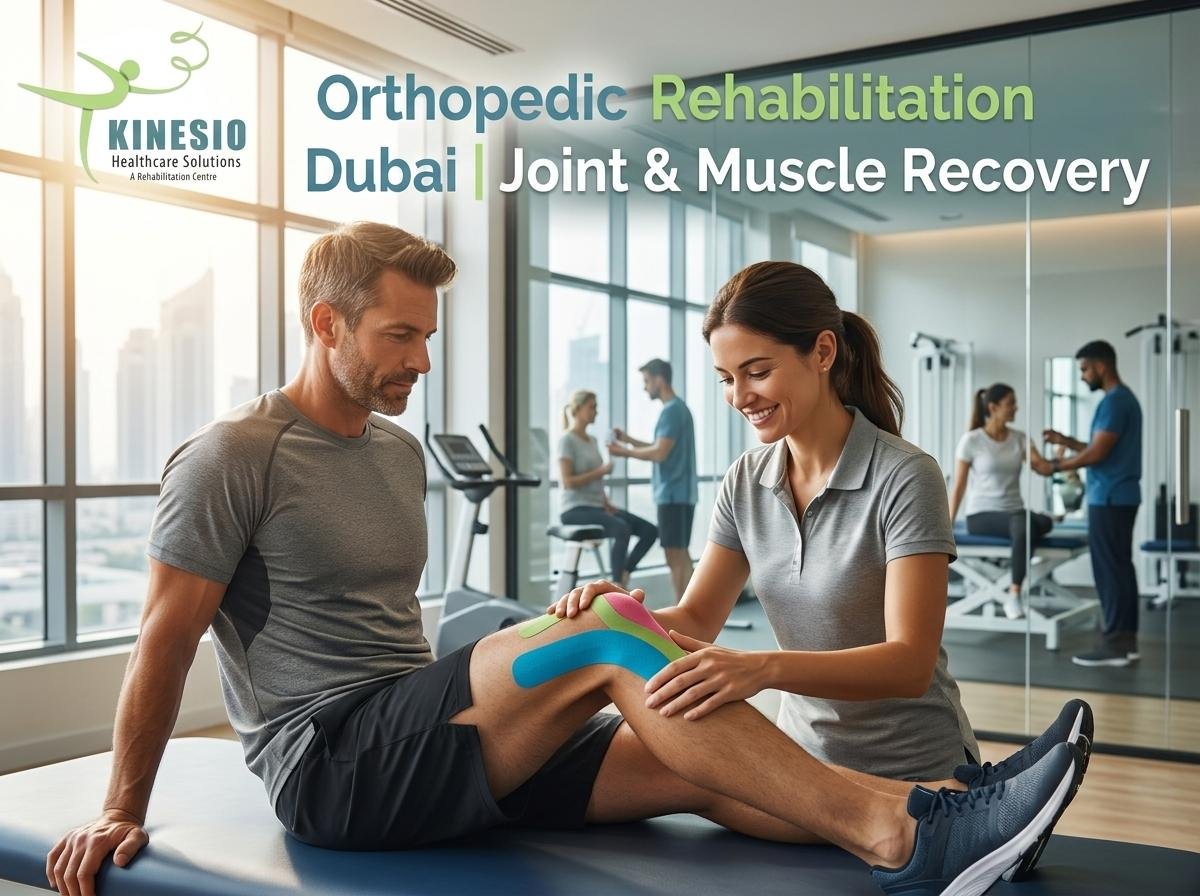
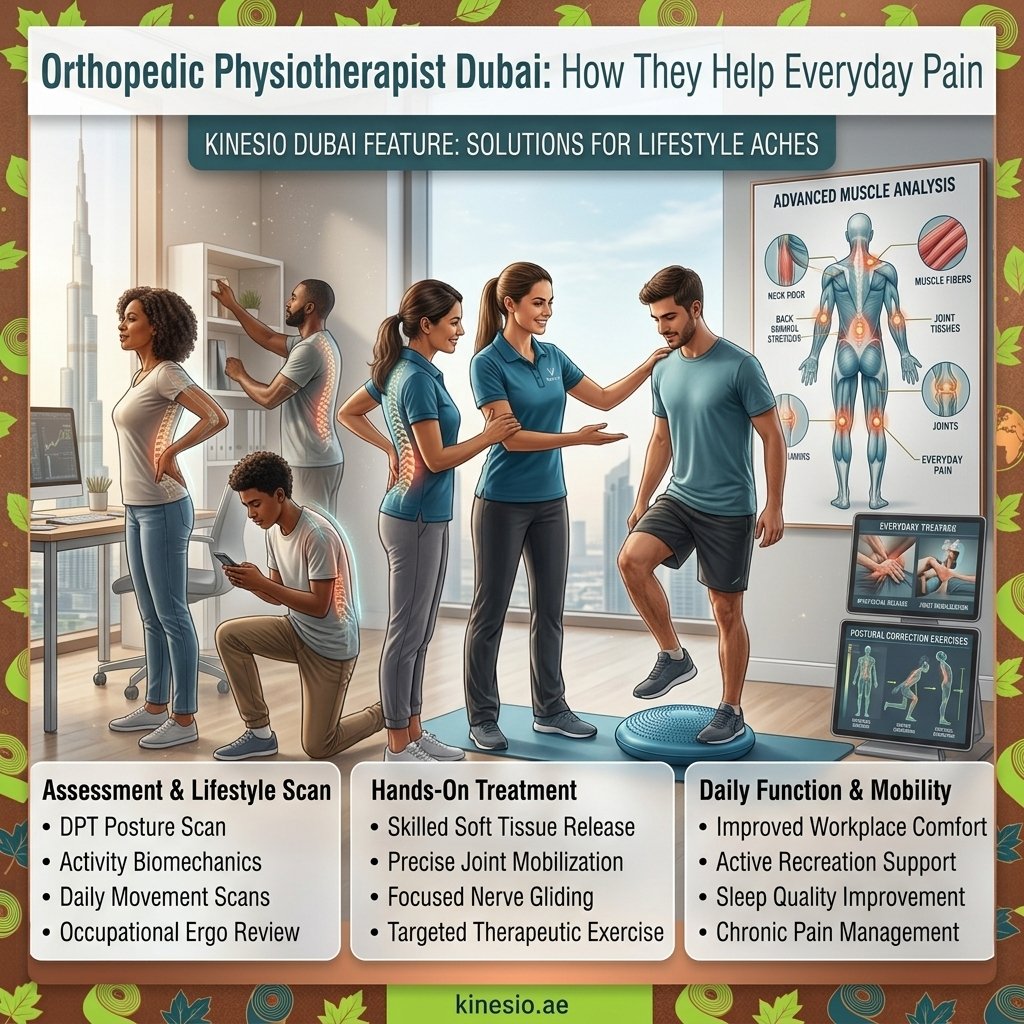
Pain does not always mean you need physiotherapy, but when discomfort starts affecting your movement, work, exercise or everyday routine, an assessment can help you understand the next step.
Orthopedic physiotherapy treatment may be appropriate when a muscle, joint, tendon, ligament or other musculoskeletal problem is limiting your normal activities. It can help people recover from injuries, manage certain joint conditions, rebuild strength after inactivity and regain function following orthopedic surgery.
The important question is not simply where you feel pain. It is what may be causing the problem, how it affects your physical function and what you need to be able to do again.
For example, someone with knee pain may struggle to climb stairs. Another person may find it difficult to lift their arm after a shoulder injury. An athlete may feel ready to return to training but still lack strength or confidence. Each situation calls for a different assessment and potentially a different rehabilitation plan.
At Kinesio Healthcare Solutions in Dubai, musculoskeletal and orthopedic physiotherapy is available for conditions involving joints, muscles, spinal structures and other parts of the movement system. The clinic’s service includes sports injuries, overuse injuries, joint pain, muscle weakness and rehabilitation after surgery.
This guide explains when orthopedic physiotherapy may be the right choice, what happens during treatment, when medical assessment should come first, and how to decide which kind of care is appropriate for your needs.
What Is Orthopedic Physiotherapy Treatment?
Orthopedic physiotherapy focuses on assessing and rehabilitating problems affecting the musculoskeletal system. This includes the structures that support movement, such as bones, muscles, joints, tendons and ligaments.
Treatment aims to improve function and help people manage the physical limitations associated with injury or musculoskeletal conditions.
Depending on the assessment, an orthopedic physiotherapist may use:
- Therapeutic exercises
- Strengthening and mobility programmes
- Functional movement training
- Manual therapy when appropriate
- Balance and coordination exercises
- Education about activity and recovery
- Progressive rehabilitation after injury or surgery
- Home exercises to support progress between appointments
Not every patient needs every technique.
Someone with an ankle sprain may need to rebuild balance and strength. A person with osteoarthritis may benefit from a tailored exercise programme. Someone recovering from surgery needs rehabilitation that follows the surgeon’s instructions and respects the healing stage.
The treatment should match the individual’s condition, rather than applying the same routine to everyone.
The World Health Organization explains that rehabilitation helps people optimise functioning and reduce disability, with care designed around individual needs and goals.
Source: World Health Organization — Rehabilitation

When Should You Consider Orthopedic Physiotherapy?
You may want to arrange an assessment when a musculoskeletal problem starts interfering with the activities that matter to you.
Some common reasons include persistent pain, restricted movement, reduced strength, difficulty exercising or symptoms that keep returning.
1. Pain Is Affecting Everyday Activities
Pain becomes more important when it starts changing how you live.
You might begin avoiding stairs because your knee hurts. You may stop reaching overhead because your shoulder feels uncomfortable. Perhaps you need frequent breaks during a walk because your hip or ankle becomes painful.
These changes are useful reasons to consider an assessment, particularly when symptoms continue or worsen.
An orthopedic physiotherapist can examine the relevant movement patterns and physical limitations and help determine whether rehabilitation is appropriate.
The objective is not simply to treat a painful area. It is to understand what is making the activity difficult and how that function might be improved.
2. A Previous Injury Has Not Fully Recovered
Some injuries improve initially but leave behind weakness, stiffness or reduced confidence.
For example, a person may recover from an ankle sprain and return to walking comfortably, yet still struggle with uneven ground or quick changes of direction.
A recreational athlete may return to the gym after a muscle strain but find that lifting at the previous intensity remains uncomfortable.
In these situations, recovery may require more than waiting for the pain to disappear.
Orthopedic rehabilitation can help address remaining physical limitations and progressively rebuild the strength and movement needed for normal activities.
The appropriate programme depends on the original injury, its severity and the person’s current abilities.
3. Your Joint Feels Stiff or Difficult to Move
Stiffness can occur after an injury, surgery, a period of inactivity or certain joint conditions.
You might notice difficulty straightening your knee, raising your arm, turning your neck or moving your ankle comfortably.
A physiotherapist can assess the range of movement and consider what may be contributing to the restriction.
Depending on the findings, treatment may involve suitable mobility exercises, strengthening, movement practice or other appropriate techniques.
Do not force a stiff joint through severe pain, particularly after an injury or surgery. The appropriate approach depends on the underlying condition.
4. You Have Muscle Weakness
Muscle weakness can develop after injury, surgery, prolonged inactivity or other health problems.
You may notice it when standing up from a chair, climbing stairs, carrying groceries or performing your normal workout.
An assessment can help determine which movements are limited and whether a structured strengthening programme is appropriate.
Exercises may progress gradually as your strength and tolerance improve.
5. You Are Recovering After Surgery
Recovery after orthopedic surgery often involves a rehabilitation phase.
Depending on the operation, you may need help rebuilding movement, strength, balance or confidence.
The programme must be specific to the procedure. Recovery after a knee replacement is not the same as rehabilitation after ligament repair or shoulder surgery.
Your physiotherapist should work within the guidance provided by your surgical team and adjust exercises according to the healing stage.
6. Pain Keeps Returning
Recurring symptoms can be frustrating.
You may feel better after resting, only for the same problem to return when you start exercising or working normally.
There can be several explanations. The affected area may not yet tolerate the demands placed on it, strength may need further development, or the activity load may need adjustment.
Repeated pain does not necessarily mean you have a serious injury, but it is worth investigating when the problem affects normal function.
A physiotherapy assessment can help identify relevant factors and determine whether rehabilitation or further medical investigation is needed.
Which Conditions Can Orthopedic Physiotherapy Help With?
Orthopedic physiotherapy may form part of the care plan for a wide range of musculoskeletal conditions.
The exact approach depends on diagnosis, severity, symptoms and individual goals.
Joint Pain
Knee, shoulder, hip, ankle and other joint problems may affect walking, lifting, exercise and daily activities.
Depending on the cause, treatment may focus on strength, movement, balance and functional ability.
For osteoarthritis, for example, NICE recommends therapeutic exercise tailored to individual needs, including local muscle strengthening and general aerobic fitness.
Source: NICE — Osteoarthritis: Diagnosis and Management
Sports Injuries
Sprains, strains, selected tendon problems and other sports injuries can require rehabilitation before a person returns to unrestricted activity.
A treatment plan may progress from appropriate early movement to strengthening, balance exercises and sport-specific activity.
Muscle Strains
A muscle strain can affect movement and make normal exercise difficult.
Rehabilitation depends on the severity and location of the injury. It may involve an appropriate return to movement followed by progressively harder strengthening exercises.
Sudden severe pain, substantial swelling, bruising or major weakness should be assessed rather than managed with aggressive massage or stretching.
Tendon and Overuse Problems
Tendon symptoms may develop when physical demands exceed the body’s current capacity to tolerate them.
The appropriate treatment may include adjusting aggravating activities and progressively rebuilding strength and load tolerance.
A physiotherapist can help determine which modifications and exercises are suitable after considering the likely diagnosis.
Spinal and Movement-Related Problems
Some neck and back conditions can also be managed with physiotherapy, depending on the symptoms and underlying cause.
Treatment may involve movement education, exercise, strength development and strategies for maintaining appropriate activity.
Certain symptoms, especially significant or progressive neurological changes, require medical assessment rather than routine rehabilitation alone.
Orthopedic Physiotherapy vs Waiting for the Pain to Settle
Not every minor ache requires professional treatment.
A short-lived discomfort after an unfamiliar workout may improve with sensible activity adjustment and recovery.
However, waiting without reassessment is less useful when the problem persists, keeps returning or prevents normal movement.
Consider these three examples.
Example one: A painful knee after exercise. If the discomfort is mild and settles, reducing the training load briefly may be sufficient. If pain continues or makes walking and stairs difficult, an assessment may help identify the next step.
Example two: A shoulder that remains stiff after an injury. Avoiding movement indefinitely may not restore normal function. Depending on the injury, appropriate rehabilitation may be needed to recover movement and strength.
Example three: An old ankle sprain that affects sport. Walking comfortably does not always mean the ankle is ready for jumping or rapid changes of direction. A rehabilitation plan can address the additional demands of the sport.
These are illustrative examples rather than diagnoses. The right choice depends on the person’s symptoms and clinical findings.
What Happens During an Orthopedic Physiotherapy Assessment?
An initial assessment usually begins with a conversation about your symptoms and goals.
Your physiotherapist may ask when the problem started, whether an injury occurred, what movements aggravate the symptoms and how the problem affects work, exercise or daily activities.
The physical assessment may then examine relevant areas, including:
- Range of movement
- Muscle strength
- Joint movement
- Balance and coordination
- Walking or functional movements
- Activities that cause discomfort
- Previous injury or surgery
- Other relevant clinical findings
Not every test is necessary for every patient.
The assessment should be tailored to the problem and should help determine whether physiotherapy is appropriate, what treatment options may be suitable and whether additional medical assessment is needed.
At Kinesio Healthcare Solutions, the musculoskeletal and orthopedic physiotherapy service describes an individualised approach, with treatment planning based on the patient’s concerns, goals and lifestyle.
Learn more about Musculoskeletal & Orthopedic Physiotherapy at Kinesio Healthcare Solutions.
What Does a Treatment Plan Usually Include?
An orthopedic physiotherapy plan may combine several approaches, depending on the condition.
Therapeutic Exercise
Exercises may be selected to improve strength, mobility, balance or physical capacity.
The programme should begin at an appropriate level and become more challenging as your abilities improve.
Manual Therapy
Hands-on techniques may be considered for selected musculoskeletal problems.
Their role depends on the condition and should be explained as part of the broader treatment plan.
Functional Training
The physiotherapist may work on activities that are difficult, such as stepping, squatting, lifting or walking.
As rehabilitation progresses, these exercises can become more closely related to your everyday or sporting goals.
Education and Activity Modification
You may receive advice about managing activity, avoiding sudden increases in physical demand and maintaining suitable movement while recovering.
Home Exercises
Some of the work may need to continue between appointments.
A manageable home programme can help you practise the movements and build the capacity required for your goals.
The combination should reflect your condition rather than a fixed package of techniques.
Is Orthopedic Physiotherapy Suitable for Chronic Joint Pain?
It may be appropriate for some people with persistent joint problems, including certain cases involving osteoarthritis.
The aim is not always to promise that every symptom will disappear. Treatment may instead focus on improving strength, mobility, function and the ability to participate in everyday activities.
For example, a person with knee osteoarthritis may want to walk for longer, manage stairs more comfortably or return to a suitable exercise routine.
Therapeutic exercise tailored to the person’s abilities is an important part of osteoarthritis management, according to NICE.
Source: NICE — Recommendations for Osteoarthritis
People with chronic symptoms should receive an assessment that considers their full health history and current functional limitations. Treatment may need to be coordinated with medical care where appropriate.
How Long Does Orthopedic Rehabilitation Take?
There is no single timeline for every musculoskeletal condition.
Recovery depends on the type and severity of the problem, how long symptoms have been present, previous injuries, general health and the physical demands you want to return to.
A mild strain may follow a different course from a significant ligament injury or recovery after surgery.
Instead of relying only on the number of sessions, discuss the goals of rehabilitation with your physiotherapist.
Progress may be measured through changes in movement, strength, balance, exercise tolerance and the ability to perform normal activities.
Your programme should be reviewed as your abilities change.
When Should Medical Assessment Come First?
Physiotherapy is appropriate for many musculoskeletal problems, but some symptoms need urgent medical evaluation.
Seek urgent care after significant trauma, when a joint has an obvious deformity, or when severe pain is accompanied by major swelling or an inability to use the affected limb normally.
A hot, swollen joint together with fever or feeling unwell also needs prompt medical attention.
Back or neck symptoms accompanied by new bladder or bowel problems, numbness around the genital or anal area, or severe or worsening weakness require urgent evaluation.
Do not delay emergency care in order to book a routine physiotherapy appointment.
For less urgent but persistent symptoms, a healthcare professional can help determine whether physiotherapy, further investigation or another form of treatment is appropriate.
How to Decide Whether Orthopedic Physiotherapy Is Right for You
Use these questions as a starting point.
Is the problem affecting everyday movement? Difficulty walking, reaching, climbing stairs or performing normal activities may justify an assessment when symptoms persist.
Have you suffered an injury? A physiotherapist can assess recovery needs, provided the injury does not require urgent medical care first.
Are you recovering from surgery? Follow the surgical team’s advice and ask about an appropriate rehabilitation plan.
Does the problem keep returning? Repeated symptoms may indicate that further assessment is useful.
Are you unsure what is causing the pain? Avoid choosing a treatment based only on the painful location. Start by getting the problem assessed.
These questions do not replace a clinical diagnosis, but they can help you decide when to seek professional guidance.
Orthopedic Physiotherapy Treatment in Dubai
People searching for orthopedic physiotherapy treatment in Dubai may be dealing with anything from a recent sports injury to persistent stiffness or difficulty returning to exercise.
The most appropriate starting point depends on the problem.
At Kinesio Healthcare Solutions, musculoskeletal and orthopedic physiotherapy is offered for a range of conditions, including joint pain, sports injuries, overuse conditions, muscle weakness and rehabilitation after surgery. The clinic is located at Arjaan by Rotana in Dubai Media City.
If you are considering physiotherapy, review the clinic’s orthopedic physiotherapy service and contact the team to discuss whether the service fits your situation.
A personalised assessment is more useful than choosing a treatment simply because it is popular or advertised as a quick fix.
Frequently Asked Questions
When should I choose orthopedic physiotherapy treatment?
Consider an assessment if musculoskeletal pain, stiffness, weakness or an injury is affecting movement, exercise, work or everyday tasks, particularly when symptoms persist or recur.
What is the difference between orthopedic and general physiotherapy?
Physiotherapy is a broad profession covering many areas of health and rehabilitation. Orthopedic physiotherapy focuses specifically on musculoskeletal conditions involving joints, bones, muscles, tendons and ligaments.
Can orthopedic physiotherapy help joint pain?
It may help improve movement and function for many musculoskeletal conditions. The treatment depends on the underlying cause of the pain and the individual’s assessment.
Can I have physiotherapy after surgery?
Yes, physiotherapy is commonly part of rehabilitation after selected orthopedic surgeries. The programme should follow the surgical team’s instructions and account for the stage of healing.
Do I need a doctor’s referral?
Referral requirements depend on the clinic, your insurance policy and the nature of your condition. Check the requirements before booking, especially if you plan to claim through insurance.
How many physiotherapy sessions are required?
There is no fixed number. It depends on the condition, severity, goals and response to rehabilitation. Your physiotherapist can discuss a more appropriate plan after assessment.
Is orthopedic physiotherapy only for athletes?
No. It can also be relevant to office workers, active adults, older people and anyone recovering from a musculoskeletal injury or orthopedic procedure.
Is pain after exercise always a reason to seek treatment?
Not necessarily. Mild, short-lived soreness may settle with recovery and activity adjustment. Persistent, worsening or function-limiting pain deserves more attention.
Final Thoughts
Orthopedic physiotherapy can be the right choice when a muscle, joint or other musculoskeletal problem is stopping you from moving comfortably, recovering fully or returning to normal activities.
It is particularly worth considering when symptoms persist, an injury has left you weak or stiff, a joint problem affects everyday life, or you need a structured plan after surgery.
The decision should be based on an individual assessment rather than a generic list of exercises or treatments.
For people in Dubai, Kinesio Healthcare Solutions provides musculoskeletal and orthopedic physiotherapy as part of its broader physiotherapy and rehabilitation services.
The first step is to understand the problem, discuss your goals and determine whether rehabilitation is appropriate. From there, a well-planned programme can help you work toward better movement, strength and day-to-day function.
Author: Kinesio Healthcare Solutions Editorial Team
Clinical review: Add the name and credentials of an actual licensed physiotherapist after they have reviewed and approved the article.
This article is for general educational purposes and is not a substitute for personalised diagnosis or medical advice.