When pain starts interfering with ordinary things such as walking, climbing stairs, sitting at work, getting out of a chair, lifting a bag or returning to the gym, the problem is bigger than just “a little pain.”
This is where an orthopedic physiotherapist Dubai can help.
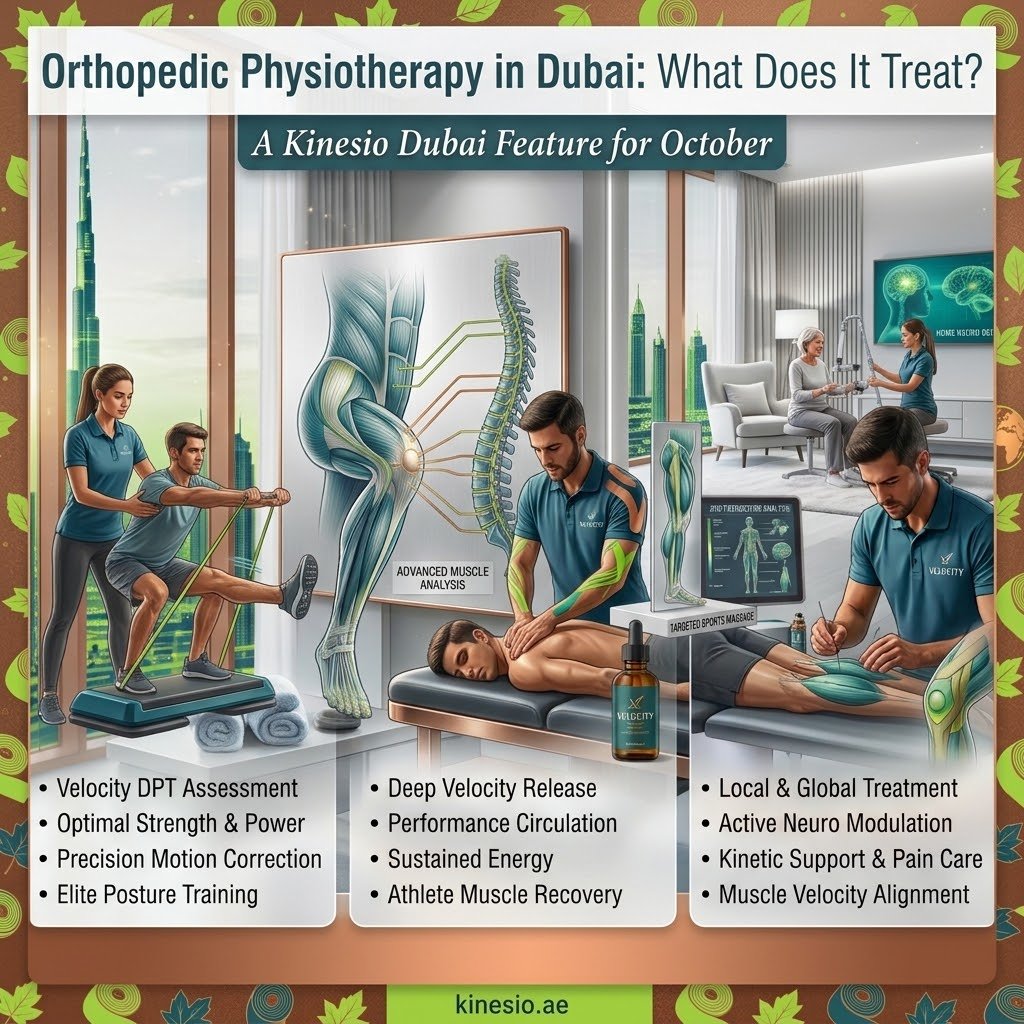
An orthopedic physiotherapist assesses problems involving the muscles, joints, bones, tendons and ligaments and then builds a rehabilitation plan around the person’s movement, strength, symptoms and daily goals. The aim is not simply to make an uncomfortable area feel better for a short time. It is to help restore movement and function so that everyday activities become easier again.
That distinction matters because musculoskeletal conditions can range from short-term sprains and strains to persistent joint and back problems. The World Health Organization says musculoskeletal conditions affect muscles, bones, joints and connective tissues, and are a major contributor to the global need for rehabilitation.
In Dubai, people may search for orthopedic physiotherapy, musculoskeletal care, pain rehabilitation or mobility therapy without knowing which service actually fits their problem. A good starting point is understanding what an orthopedic physiotherapist does, what happens during an assessment and how rehabilitation can fit into everyday life.
What Does an Orthopedic Physiotherapist Actually Do?
An orthopedic physiotherapist works primarily with musculoskeletal problems.
That can include pain or movement difficulties involving the:
- Knee
- Shoulder
- Hip
- Ankle
- Back
- Neck
- Elbow
- Wrist
- Muscles
- Tendons
- Ligaments
Treatment can also be appropriate during recovery after certain orthopedic surgeries or injuries.
But the role is broader than treating one body part.
A physiotherapist may want to understand:
- What movements cause symptoms
- How much strength you currently have
- Whether a joint is stiff
- Whether an old injury is affecting your movement
- What activities you have stopped doing
- What your work demands are
- How your symptoms affect sleep or exercise
- What you want to return to
NHS guidance describes physiotherapy as care that can improve movement and help with pain, injury, illness or disability, with treatment potentially including exercise, manual therapy and advice about managing symptoms.
So, when someone searches for an orthopedic physiotherapist Dubai, they are not necessarily looking only for a massage or a pain-relief session. They may actually need a combination of assessment, education, movement work and progressive rehabilitation.
Why Everyday Pain Deserves Attention
Many people become used to pain.
A knee hurts when climbing stairs, so they take the lift.
The shoulder hurts when reaching overhead, so they stop using that arm.
The back feels stiff after sitting, so they stand up less often.
An ankle that was injured months ago still feels unstable, so they stop running.
These small adjustments can gradually change a person’s routine.
The pain itself may not be the only issue. Reduced activity can lead to reduced strength or confidence, which can make everyday tasks harder.
The WHO notes that musculoskeletal conditions can limit mobility and dexterity and can affect people’s ability to work and participate in society.
That is why pain rehabilitation often needs to look at the bigger picture.
The useful question is not simply:
“How do I stop this pain?”
It is also:
“What do I need to be able to do again?”
That could be walking comfortably, returning to sport, working at a desk without constant discomfort or simply getting through the day without avoiding normal movements.
Everyday Problems an Orthopedic Physiotherapist Can Help With
Orthopedic physiotherapy can be relevant to many ordinary situations.
Knee Pain When Using Stairs
A person may have little discomfort on flat ground but experience pain when going upstairs or downstairs.
That does not automatically mean arthritis.
It may be related to several factors, including the way the knee is loaded, muscle strength, movement control, previous injury or another musculoskeletal problem.
An assessment can look at the knee and the rest of the lower limb rather than assuming the painful spot tells the whole story.
Shoulder Pain While Reaching
Reaching into a cupboard may seem like a small movement, but it can become very uncomfortable with a shoulder problem.
A physiotherapist may assess shoulder range of motion, strength and movement control and then gradually work toward the activities the person needs to perform.
Stiffness After Sitting
Long periods in one position can make the back, neck or hips feel stiff.
This does not necessarily mean there is serious damage.
Instead, the focus may be on movement variety, physical capacity, ergonomic changes and suitable exercise.
Difficulty Returning to Exercise
Sometimes pain has improved but confidence has not.
A person may still be worried about lifting, running or squatting after an injury.
That is where progressive rehabilitation becomes valuable.
Rather than jumping from complete rest to a full workout, activity can be rebuilt step by step.
What Is Musculoskeletal Care?
You may see musculoskeletal care used by hospitals, physiotherapy clinics and rehabilitation services.
It refers broadly to assessment and treatment of conditions affecting the body’s movement system.
The WHO describes the musculoskeletal system as including muscles, bones, joints and adjacent connective tissues, and notes that there are more than 150 conditions affecting these structures.
In practical terms, musculoskeletal care can include people dealing with:
- Joint pain
- Muscle injuries
- Tendon problems
- Ligament injuries
- Back pain
- Neck pain
- Arthritis
- Sports injuries
- Stiffness
- Reduced strength
- Post-surgical rehabilitation
This is why orthopedic and musculoskeletal physiotherapy often overlap.
The exact terminology can vary from one clinic to another, but the underlying focus remains the person’s movement, symptoms and function.
Why an Assessment Matters Before Treatment
One of the most common mistakes people make is choosing a treatment before understanding the problem.
For example, someone may have knee pain and immediately book massage.
Someone else may have shoulder stiffness and search for exercises.
Another person may buy a brace because the joint feels unstable.
Sometimes these approaches may be appropriate.
Sometimes they are not.
The first assessment can provide more useful information.
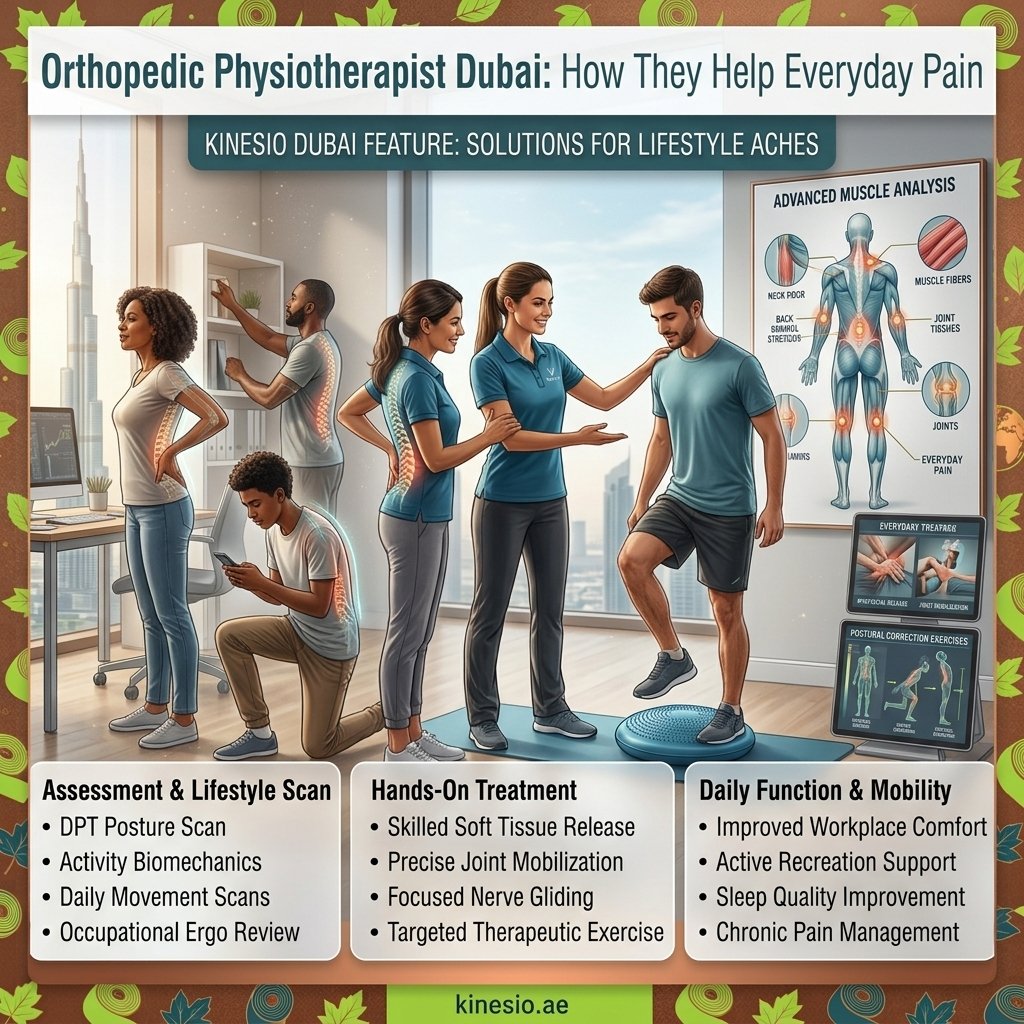
A physiotherapist may examine:
Range of Motion
Can the joint move through an expected range?
Strength
Are specific muscles weaker than expected?
Balance
Can you control the affected limb during movement?
Functional Movement
What happens when you squat, walk, step, reach or perform another everyday task?
Symptoms
Which movements increase or reduce discomfort?
History
Did the problem follow an injury, surgery, overuse or gradual change?
NHS guidance says a first physiotherapy appointment commonly includes discussion of symptoms, medical history and lifestyle, followed by assessment of areas such as strength and balance.
That is a more useful starting point than guessing from symptoms alone.
How Orthopedic Physiotherapy Can Support Pain Rehabilitation
Pain rehabilitation is not always about trying to eliminate every sensation immediately.
For some conditions, the rehabilitation goal is to improve function while symptoms gradually settle.
A programme may include:
- Therapeutic exercise
- Strength training
- Mobility work
- Manual therapy
- Education
- Movement retraining
- Activity modification
- Home exercises
- Gradual return to work or sport
NHS musculoskeletal physiotherapy services commonly combine exercise, education, biomechanical assessment, manual therapy, taping and return-to-sport rehabilitation according to individual needs.
The exact programme should be tailored.
Someone with osteoarthritis will not necessarily need the same approach as someone recovering from an ankle sprain.
A runner with an overload problem will have different goals from an office worker with persistent stiffness.
Why Exercise Is Usually Part of Rehabilitation
A common expectation is that physiotherapy means somebody else does the treatment while you relax.
Modern rehabilitation is usually more active than that.
Exercise can help develop the physical capacity needed for work, daily movement and sport.
For osteoarthritis, NICE recommends tailored therapeutic exercise as a core treatment and notes that it can help reduce symptoms and improve or maintain physical function.
For low back pain with or without sciatica, NICE also recommends exercise based on the person’s needs and capabilities and encourages continuation of normal activities where appropriate.
That does not mean every person needs the same exercises.
A good programme starts where the patient is today.
Then it progresses.
What Does Mobility Therapy Mean?
The phrase mobility therapy can sound complicated, but the idea is simple.
If a person has difficulty moving a joint or body region, therapy may focus on improving the movement that is actually limited.
For example:
A stiff ankle may affect walking or squatting.
A stiff shoulder may affect reaching.
Limited hip movement may make certain movements uncomfortable.
Back stiffness may make bending difficult.
Mobility work can involve active exercises, stretching, joint movement or other techniques depending on the condition.
The important part is understanding why mobility is limited.
Stretching something repeatedly is not always the answer.
Sometimes the bigger issue is weakness, pain sensitivity, poor movement control or a previous injury.
Can Manual Therapy Help?
Manual therapy is commonly used as one component of physiotherapy.
It may involve hands-on techniques directed at joints or soft tissues.
The purpose depends on the condition and can include helping movement or reducing symptoms.
But manual therapy should not automatically be considered the entire treatment.
For knee and hip osteoarthritis, NICE specifically recommends that manual therapy only be considered alongside therapeutic exercise because the evidence does not support using manual therapy alone as the main management approach.
That principle is useful beyond arthritis as well.
Hands-on treatment can be helpful for selected patients, but long-term physical function usually requires the patient to actively participate in rehabilitation.
Orthopedic Physiotherapy After an Injury
Imagine a recreational football player who twists an ankle.
At first, the main concerns may be pain and swelling.
Later, the pain improves, but the ankle still feels weak.
Then the player tries to return to football and notices difficulty with quick changes of direction.
The recovery problem has changed.
The athlete may now need strength, balance, control and sport-specific movement.
This is why rehabilitation is usually progressive.
The treatment at week one does not necessarily need to look like the treatment several weeks later.
A similar principle applies to many orthopedic injuries.
The target gradually changes from:
protecting the injured area
to
restoring movement
to
rebuilding strength
to
improving function
to
returning to normal activity
Orthopedic Physiotherapy After Surgery
Surgery can address a structural problem, but recovery often continues afterwards.
A patient may need rehabilitation following procedures involving the knee, hip, shoulder or another part of the musculoskeletal system.
Post-surgical physiotherapy can help address issues such as:
- Stiffness
- Reduced strength
- Difficulty walking
- Reduced confidence
- Functional limitations
- Gradual return to normal activities
The programme must be appropriate to the procedure and stage of healing.
It should also align with the surgeon’s instructions.
Kinesio Healthcare Solutions currently lists post-surgical rehabilitation within its orthopedic physiotherapy service, alongside joint pain, sports injuries, muscle weakness and other musculoskeletal conditions.
How Orthopedic Physiotherapy Helps Active Adults
Not everyone who needs orthopedic physiotherapy is an athlete.
But active adults often have a very specific reason for wanting recovery.
They may want to:
- Return to the gym
- Start running again
- Play padel
- Return to football
- Get back to cycling
- Lift without fear
- Walk long distances
- Travel comfortably
The rehabilitation target therefore becomes functional.
For example, a person may not care about whether their knee is perfectly pain-free during every clinical test.
They may care that they can climb four flights of stairs without having to stop.
A runner may care about completing five kilometres comfortably.
A parent may care about being able to lift and play with their child.
Those goals help shape the rehabilitation programme.
Orthopedic Physiotherapy for Office Workers
Dubai has a large population of professionals who spend much of their working day at computers, in meetings or travelling between locations.
Long periods of sitting can be associated with stiffness and discomfort, particularly when movement is limited throughout the day.
But the solution is not necessarily to find one “perfect” sitting posture.
The more practical approach is often to improve movement variety and physical capacity.
That might involve:
- Regular position changes
- Short movement breaks
- Appropriate workstation setup
- Strength exercises
- Mobility work
- Better tolerance for prolonged sitting
A physiotherapist can also assess whether persistent symptoms are related to something more specific than workplace posture.
When Is Pain a Reason to Get Assessed?
Not every ache requires a physiotherapy appointment.
A minor, short-lived discomfort after unfamiliar activity may settle with sensible activity adjustment.
However, an assessment becomes more worthwhile when:
- Pain persists
- Symptoms keep returning
- Movement is restricted
- Strength has decreased
- Daily activities are affected
- Exercise is becoming difficult
- An injury is not recovering as expected
- You are unsure what the problem is
The goal is not to make every person seek treatment for every ache.
It is to avoid allowing a persistent or function-limiting problem to become your new normal.
When Is Physiotherapy Not the First Step?
Some symptoms need medical evaluation before routine physiotherapy.
For example, significant trauma, major deformity, rapidly progressive neurological symptoms or other concerning signs may require urgent assessment.
A physiotherapist can also identify when another healthcare professional should be involved.
That is an important part of good clinical practice.
Treatment is not simply about delivering a technique. It also involves recognising when physiotherapy is appropriate and when it is not.
How to Choose an Orthopedic Physiotherapist in Dubai
If you search orthopedic physiotherapist Dubai, you will find clinics, directories and individual providers.
Current Dubai search results include dedicated orthopedic physiotherapy clinics and individual orthopedic physiotherapists, while many clinic pages focus heavily on lists of conditions and treatment techniques.
That creates an opportunity for patients to look beyond the keyword and ask better questions.
Consider:
Does the therapist assess before treating?
A proper assessment should guide the treatment plan.
Does the clinic treat your type of condition?
Someone recovering from surgery may need different expertise from someone seeking sports rehabilitation.
Is exercise part of the programme where appropriate?
For many musculoskeletal conditions, active rehabilitation is an important part of care.
Will your progress be monitored?
Your plan should evolve as you improve.
Does the clinic explain the treatment?
You should understand what you are doing and why.
Is the location practical?
A clinic that is easy to reach can make consistent attendance more realistic.
Why “Good Physiotherapy” Should Not Mean the Same Treatment for Everyone
One patient may benefit from strengthening.
Another may need mobility work.
Another may need education and activity modification.
Another may need post-surgical rehabilitation.
Another may need a more sport-specific progression.
This is why effective orthopedic physiotherapy is individual.
The diagnosis is only part of the story.
Two patients can have the same diagnosis but completely different physical capabilities and goals.
That is also why generic exercise lists on social media should be treated carefully.
An exercise that works well for one person may be unsuitable for another depending on symptoms and the underlying condition.
Practical Example: Three People, Three Different Rehabilitation Plans
The following are illustrative examples, not patient case studies.
Example 1: The Desk Worker
A 35-year-old office worker develops knee discomfort after becoming less active for several months.
The focus may be on rebuilding lower-limb strength, improving tolerance for walking and gradually increasing activity.
Example 2: The Recreational Athlete
A 29-year-old padel player develops recurring ankle problems.
The rehabilitation may need balance work, strength training, change-of-direction exercises and a gradual return to court activity.
Example 3: The Post-Surgical Patient
A 58-year-old patient is recovering after orthopedic surgery.
The programme may prioritise safe movement, range of motion, strength and functional tasks according to the surgical plan.
All three people need physiotherapy, but they clearly do not need the same treatment.
That is the value of individual assessment.
How Kinesio Healthcare Solutions Approaches Orthopedic Physiotherapy
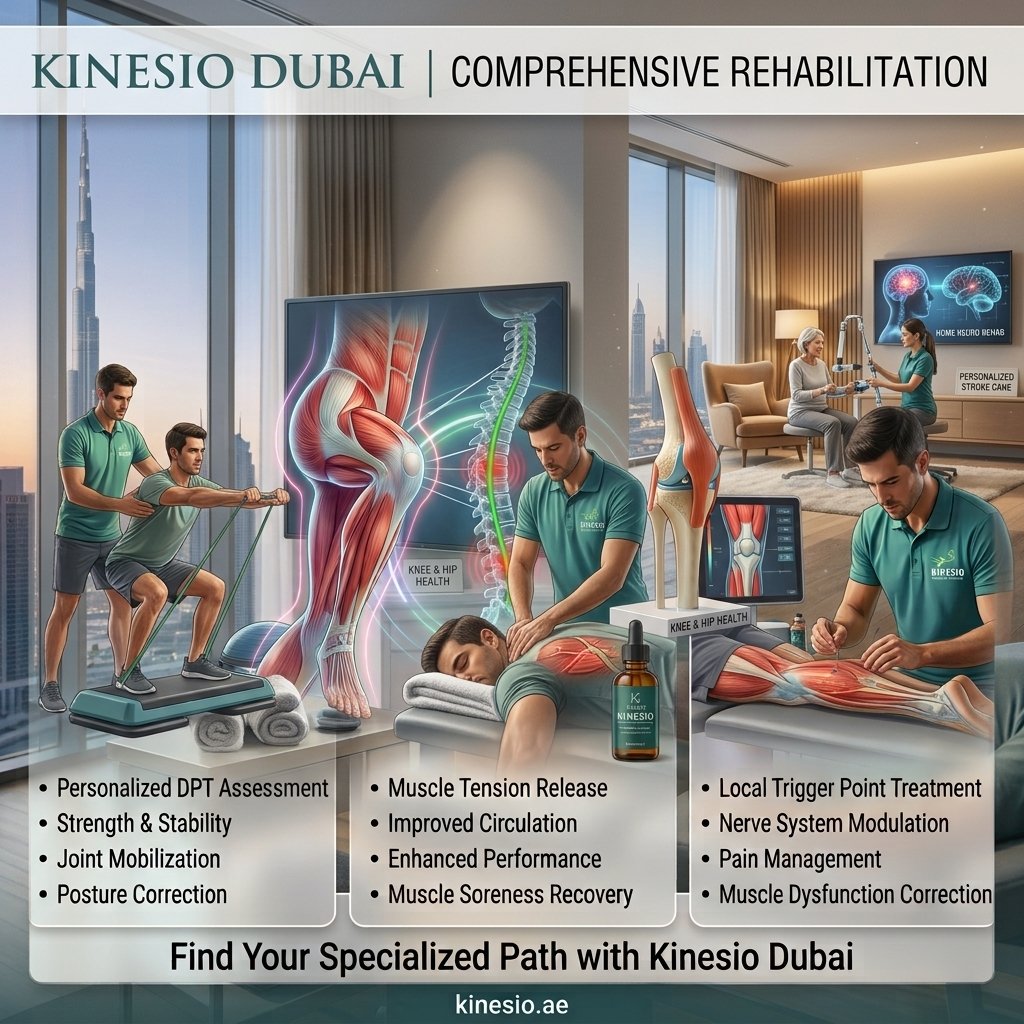
Kinesio Healthcare Solutions provides musculoskeletal and orthopedic physiotherapy in Dubai and describes its service around personalised treatment for conditions affecting joints, muscles, bones and movement. Its current orthopedic physiotherapy information includes joint pain, sports injuries, overuse injuries, spinal conditions, muscle weakness and post-surgical rehabilitation.
The clinic also provides other rehabilitation services, including sports injury rehabilitation, sports massage, dry needling and Kinesio taping, allowing treatment to be selected according to the patient’s needs rather than assuming that one technique is right for everyone.
Kinesio Healthcare Solutions is based in Dubai Media City, at Arjaan by Rotana.
For local patients, that means the decision can start with the problem itself:
Is it joint pain?
An injury?
Stiffness?
Weakness?
Post-surgical recovery?
Reduced mobility?
The answer helps determine what type of physiotherapy assessment is appropriate.
What Can You Do Between Physiotherapy Sessions?
Your progress does not happen only inside the clinic.
For many musculoskeletal conditions, the activities you do between appointments are important.
Depending on your programme, that may include:
- Home exercises
- Walking
- Mobility work
- Strength exercises
- Activity modification
- Gradual return to normal tasks
NHS physiotherapy guidance notes that patients may receive exercises to do at home between sessions and that regular completion supports recovery.
The exact exercises should come from your physiotherapist rather than a generic online list, particularly after injury or surgery.
How Long Does Orthopedic Physiotherapy Take?
There is no reliable one-size-fits-all answer.
Some relatively simple problems may improve quickly.
Others, such as persistent joint problems, substantial injuries or post-surgical rehabilitation, can require a longer programme.
Recovery can depend on:
- The underlying condition
- Severity
- How long symptoms have existed
- Previous injuries
- Strength
- Mobility
- Activity demands
- Consistency with rehabilitation
- General health
The better question is often not:
“How many sessions will I need?”
It is:
“What should be improving as I go through rehabilitation?”
That creates a clearer way to track progress.
Frequently Asked Questions
What does an orthopedic physiotherapist do?
An orthopedic physiotherapist assesses and rehabilitates musculoskeletal problems involving areas such as joints, muscles, bones, tendons and ligaments. Treatment may include exercise, movement training, education and selected manual techniques.
What conditions can orthopedic physiotherapy treat?
It can be used for many musculoskeletal problems, including joint pain, sports injuries, overuse injuries, spinal conditions, muscle weakness, arthritis-related problems and rehabilitation after orthopedic surgery.
Is orthopedic physiotherapy only for athletes?
No. Office workers, older adults, active adults and people recovering from surgery can all need orthopedic or musculoskeletal physiotherapy.
Can physiotherapy help everyday pain?
Yes. Physiotherapy can help with many movement and function problems associated with musculoskeletal conditions. The appropriate treatment depends on the cause of the symptoms and the individual’s goals.
What happens during an orthopedic physiotherapy assessment?
The physiotherapist usually asks about symptoms, medical history, lifestyle and activities, then assesses areas such as movement, strength and function before discussing treatment options.
Does physiotherapy always involve exercise?
Not every treatment plan looks the same, but exercise is an important part of rehabilitation for many musculoskeletal conditions. NICE recommends tailored therapeutic exercise as a core treatment for osteoarthritis.
Can manual therapy be part of orthopedic physiotherapy?
Yes. Manual therapy may be used for selected conditions, generally alongside active rehabilitation rather than as the only treatment.
Can orthopedic physiotherapy help after surgery?
Yes. Physiotherapy can be an important part of post-surgical rehabilitation, with the programme adapted to the procedure and healing stage. Kinesio includes post-surgical rehabilitation in its orthopedic physiotherapy service.
When should I see an orthopedic physiotherapist in Dubai?
Consider an assessment when pain is persistent, repeatedly returns, limits movement, affects work or exercise, or is not recovering as expected after an injury.
How do I choose an orthopedic physiotherapist in Dubai?
Look for a qualified provider who assesses before treating, has experience relevant to your condition, explains the rehabilitation plan and tracks progress.
Final Thoughts
Everyday pain can seem minor until it starts changing the way you live.
You stop climbing stairs.
You avoid the gym.
You stop running.
You change the way you sleep.
You take breaks at work because sitting has become uncomfortable.
Those changes are useful signals.
An orthopedic physiotherapist Dubai can help assess what is happening, identify movement or physical limitations and develop a rehabilitation plan that matches your actual needs.
The value of orthopedic physiotherapy is not simply the treatment performed during a single appointment. It is the combination of assessment, education, movement, exercise and gradual progression.
That is what makes musculoskeletal care different from simply treating a painful spot.
Whether the goal is returning to sport, improving mobility, recovering after surgery or making everyday activities easier, good pain rehabilitation should have a clear purpose.
And that purpose should ultimately be functional:
Move better. Build capacity. Return to the activities that matter to you.
Kinesio Healthcare Solutions provides musculoskeletal and orthopedic physiotherapy in Dubai alongside sports injury rehabilitation and other physiotherapy services.
For anyone researching an orthopedic physiotherapist Dubai, the best first step is not necessarily choosing the most heavily advertised treatment.
It is finding a clinician who can understand the problem, explain the options and help you build a realistic path toward better movement.
Medically Reviewed Content
This article provides general educational information about orthopedic and musculoskeletal physiotherapy. Treatment decisions should be based on an individual clinical assessment.
Author: Kinesio Healthcare Solutions Editorial Team