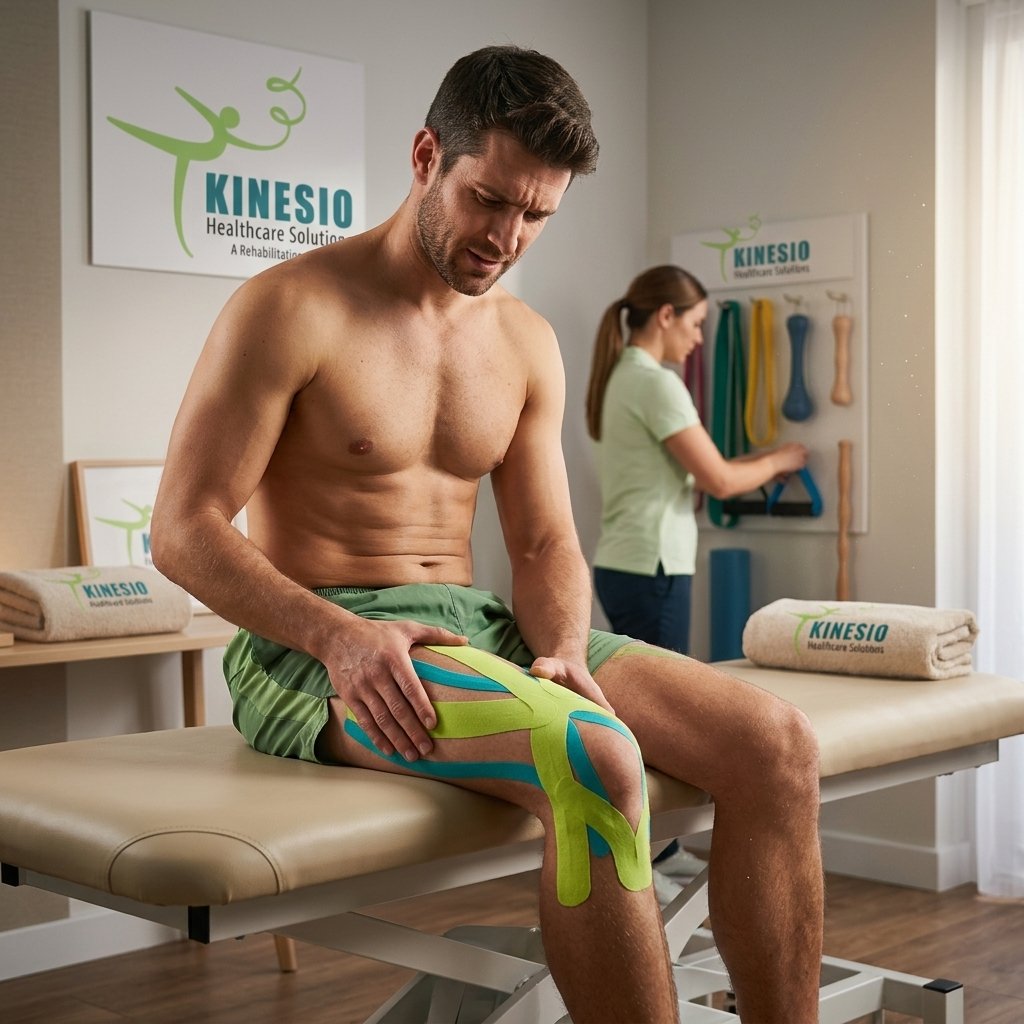
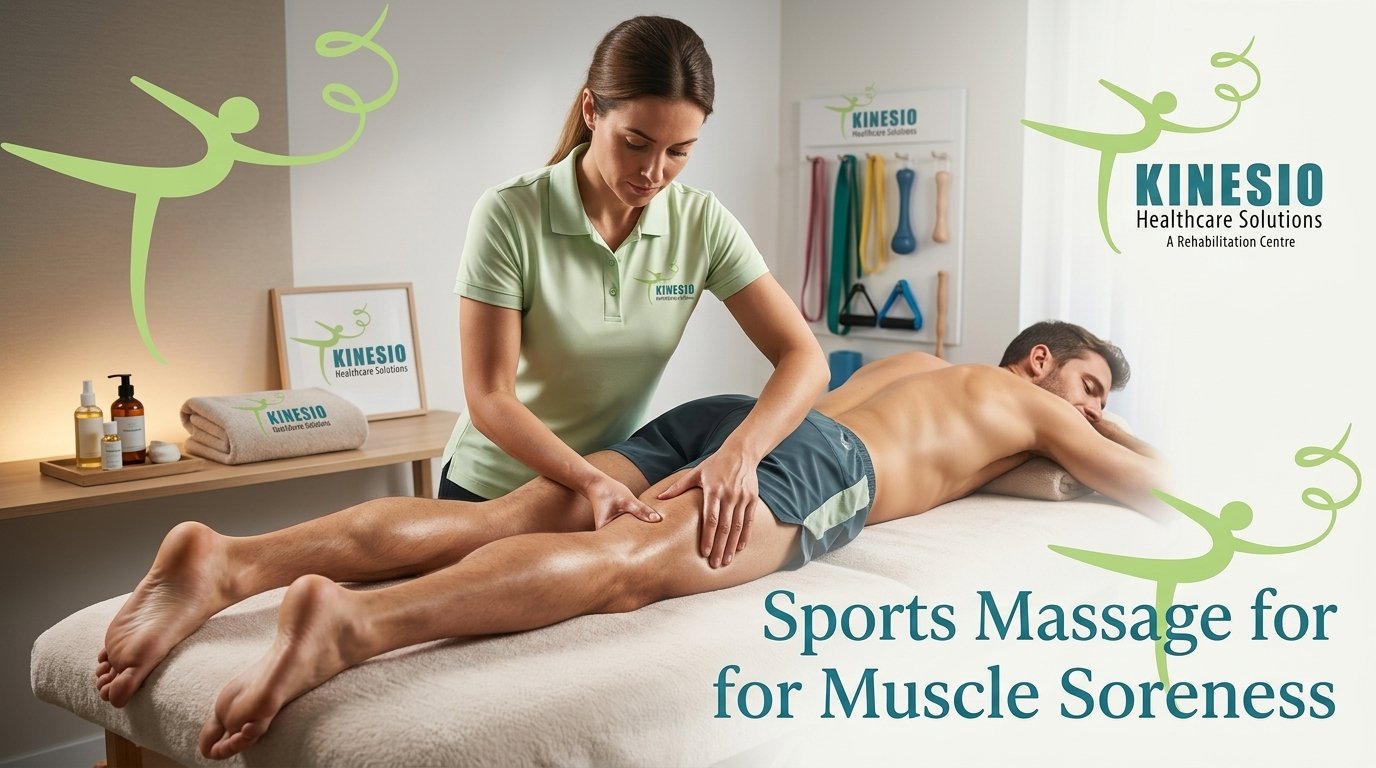
Sports massage for Muscle soreness after a hard workout is something most active people experience at some point. Whether you run, lift weights, play football, tennis or padel, your muscles can feel tight, heavy and uncomfortable after demanding training.
So, can sports massage help with muscle soreness?
It can be a useful part of a recovery routine for some active people, particularly when muscular tightness or post-training discomfort is affecting movement. However, sports massage isn’t a replacement for proper recovery, and not every type of pain should be treated with massage.
The key is understanding why your muscles are sore and whether massage is appropriate for your situation.
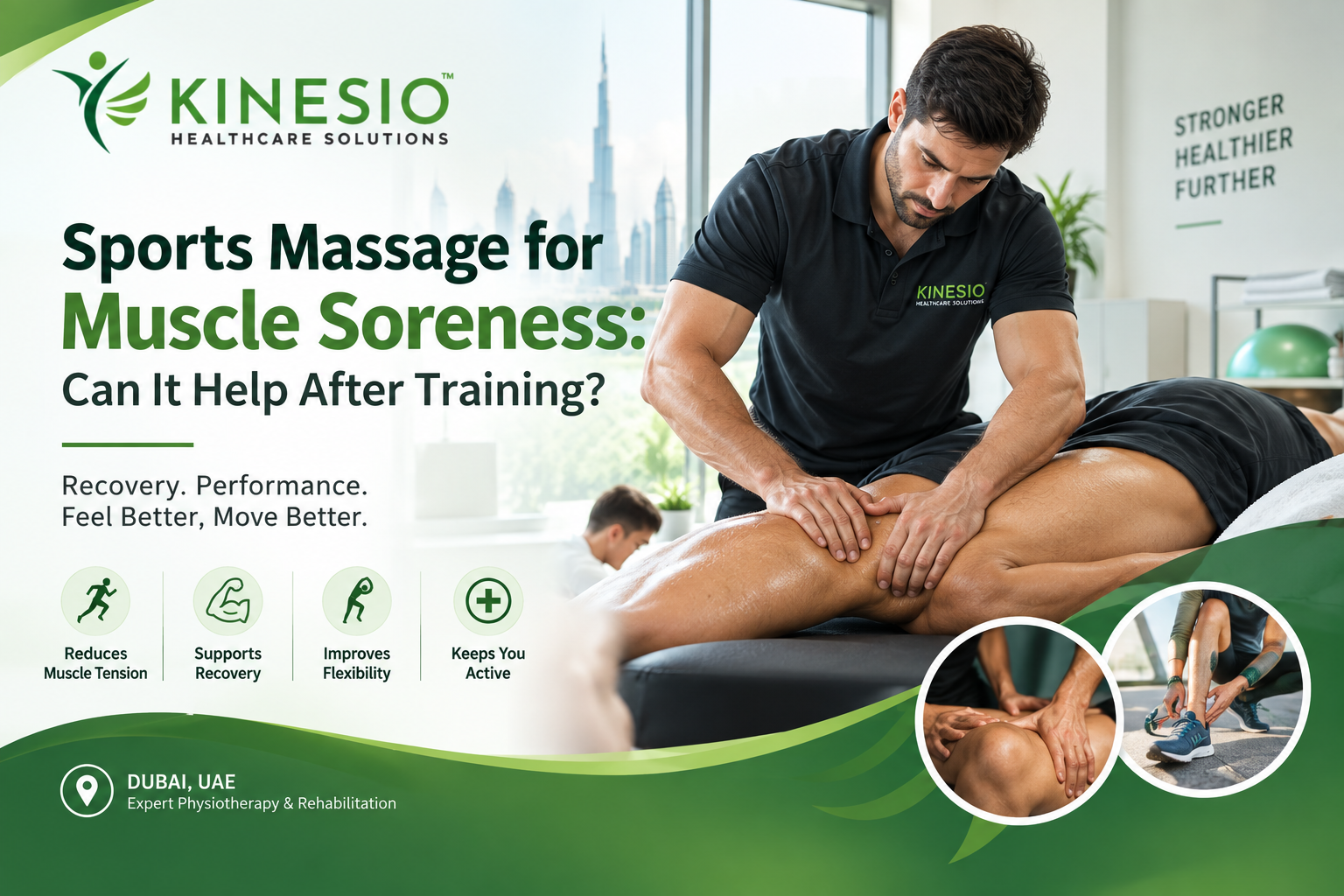
Can Sports Massage Help With Muscle Soreness?
Yes, sports massage may help some people manage muscle tightness and discomfort associated with physical activity. It can be incorporated into a wider recovery plan alongside rest, appropriate exercise, hydration, sleep and sensible training loads.
The effect can vary from person to person.
Sports massage may be particularly useful when you feel:
- Tight after training
- Stiff after repeated exercise
- Muscular discomfort after a demanding session
- Restricted movement caused by muscle tension
- General post-training muscle fatigue
However, sudden or severe pain after an injury is different from ordinary post-exercise soreness and may require assessment by a healthcare professional.
What Causes Muscle Soreness After Exercise?
Muscle soreness can happen for several reasons.
One common type is delayed-onset muscle soreness (DOMS), which can develop after unfamiliar or more intense exercise.
You may notice soreness when:
- Starting a new workout programme
- Increasing training intensity
- Increasing running distance
- Returning to exercise after a break
- Performing unfamiliar movements
- Introducing new strength exercises
- Training a muscle group harder than usual
Soreness can make everyday movements feel uncomfortable.
For example, your legs may feel stiff after a long run, or your shoulders and back may feel tired after an intense gym session.
The important distinction is between expected post-exercise soreness and pain caused by an injury.
What Is Sports Massage?
Sports massage is a massage approach commonly used by athletes and physically active people.
Despite its name, you don’t need to be a professional athlete to have one.
Sports massage can be adapted according to:
- Your sport
- Training frequency
- Recovery requirements
- Areas of muscle tightness
- Previous injuries
- Current activity level
- Individual goals
A runner, for example, may have different recovery needs from someone who plays padel or regularly performs strength training.
This is why a good sports massage should not simply be a standard routine applied to everyone.
How Does Sports Massage Help During Recovery?
Sports massage may help you feel more comfortable when muscles are tight or fatigued after physical activity.
Depending on the individual and the techniques used, massage may help with:
Muscle relaxation
Massage can help you relax areas that feel tense following physical activity.
Perceived muscle soreness
Some people report feeling less uncomfortable after massage following demanding exercise.
Mobility
When muscular tightness is affecting comfortable movement, appropriate hands-on treatment may help you move more freely.
Recovery routine
Massage can form one part of a broader recovery strategy for active people.
But it is important not to view sports massage as a shortcut around recovery.
Your body still needs appropriate rest and progressive training.
Sports Massage for Muscle Soreness: When Is It Most Useful?
Sports massage may be worth considering when muscle soreness is accompanied by a feeling of tightness or stiffness.
For example, an active person may notice:
- Tight calves after running
- Heavy legs after football
- Tight hamstrings after sprint training
- Glute or hip muscle tension after cycling
- Shoulder and upper-back tightness after gym training
- Forearm tension after tennis or padel
A practitioner can adapt the treatment to the person’s activity and the areas requiring attention.
Sports Massage After a Hard Workout
A demanding workout creates physical stress that your body needs time to recover from.
A good recovery routine may include:
Training → Recovery → Adaptation → Progressive training
Sports massage can sit within that recovery stage.
However, recovery is much broader than massage.
Consider:
- Getting enough sleep
- Drinking enough fluids
- Eating appropriately for your activity
- Allowing adequate rest
- Managing training volume
- Gradually increasing exercise intensity
- Including strength and mobility work where appropriate
Massage can complement these habits, but it cannot replace them.
Should You Get a Sports Massage When Your Muscles Are Very Sore?
Not necessarily.
If your muscles are simply tired and mildly sore after exercise, massage may be appropriate for some people.
But more pain doesn’t mean you need a stronger massage.
Very aggressive treatment on already irritated or sensitive tissue may make you feel more uncomfortable.
A practitioner should consider:
- How severe your symptoms are
- When the soreness started
- Whether there was an injury
- Which movement causes discomfort
- Your training history
- The affected area
- Your tolerance to pressure
If something feels significantly different from your normal post-workout soreness, assessment is more important than simply booking a massage.
Sports Massage vs Normal Post-Workout Soreness
It’s useful to understand the difference between ordinary muscle soreness and possible injury.
Typical post-exercise soreness may include:
- General muscle tenderness
- Stiffness
- Feeling of heaviness
- Discomfort when moving the affected muscles
- Symptoms developing after a new or demanding workout
An injury may involve:
- Sudden sharp pain
- Pain that started during a specific movement
- Significant swelling
- Major weakness
- Difficulty using the affected body part
- Pain that continues to worsen
- Symptoms that don’t behave like your usual post-workout soreness
If you suspect an injury, don’t rely on massage alone.
A physiotherapy or medical assessment may be more appropriate.
Can Sports Massage Reduce Muscle Tightness?
Sports massage may help people who experience muscular tightness after repetitive or demanding physical activity.
For example, runners may experience tightness in the:
- Calves
- Hamstrings
- Quadriceps
- Glutes
Padel and tennis players may experience tension involving the:
- Forearms
- Shoulders
- Upper back
- Legs
Gym users may notice tightness in whichever muscle groups have been subjected to high training loads.
The treatment should be tailored to the person rather than based purely on the sport they participate in.
Sports Massage for Runners
Running involves repetitive loading, especially through the lower body.
A runner may seek sports massage when they notice persistent feelings of muscular tightness after training.
Common areas include:
- Calves
- Hamstrings
- Quadriceps
- Glutes
- Hip muscles
Sports massage can be included in a runner’s recovery routine, but recurring pain should not simply be massaged away.
If the same pain keeps returning whenever you increase your running distance or intensity, it may be time to look at factors such as:
- Training progression
- Strength
- Running technique
- Recovery
- Previous injuries
- Training volume
A physiotherapy assessment can help identify factors that may be contributing to recurring problems.
Sports Massage for Gym Recovery
Strength training can create considerable muscular fatigue, particularly when you increase:
- Weight
- Repetitions
- Training frequency
- Exercise difficulty
- Training volume
You may notice muscle soreness the day after training or even several days later.
Sports massage may be used as part of a recovery routine when muscles feel tight or uncomfortable.
However, soreness after strength training doesn’t necessarily mean that something is wrong.
Adequate recovery and gradual progression remain important.
Sports Massage for Padel and Tennis Players
Padel and tennis involve repeated acceleration, deceleration, rotation and changes of direction.
Players may experience muscular fatigue in the:
- Calves
- Hamstrings
- Quadriceps
- Glutes
- Lower back
- Shoulders
- Forearms
A sports massage can be adapted around these activity demands.
If discomfort becomes persistent or starts affecting your ability to play, however, an assessment may be more useful than repeated massage sessions.
How Soon After Exercise Can You Have a Sports Massage?
There isn’t one universal time that applies to everyone.
The appropriate timing depends on:
- Exercise intensity
- Training type
- Current soreness
- Individual recovery
- The type of massage
- Whether an injury is present
A very demanding workout followed immediately by aggressive massage may not be appropriate for everyone.
If you are particularly sore after training, tell your practitioner before the session so the treatment can be adapted appropriately.
How Often Should You Get Sports Massage for Muscle Recovery?
There is no fixed number of sessions that every athlete needs.
Someone who exercises twice a week will have different recovery requirements from someone training six days a week.
Frequency can depend on:
- Training volume
- Sport
- Competition schedule
- Recovery needs
- Muscle tightness
- Previous injuries
- Personal goals
Instead of following a fixed schedule, consider how your body responds and discuss an appropriate approach with your practitioner.
Does Sports Massage Prevent Muscle Injuries?
Sports massage should not be promoted as a guarantee against injury.
Injury prevention is influenced by many factors, including:
- Strength
- Mobility
- Training progression
- Recovery
- Sleep
- Technique
- Training load
- Previous injury
- Sport-specific preparation
Massage may support recovery, but it shouldn’t replace these fundamentals.
If you repeatedly experience pain during the same activity, identifying the underlying cause is more important than simply increasing massage frequency.
When Should You Choose Physiotherapy Instead?
Sports massage may be suitable for recovery and muscular tightness, but physiotherapy may be more appropriate when you have an ongoing or unexplained musculoskeletal problem.
Consider a physiotherapy assessment if you have:
- Recurring pain
- Pain that limits your movement
- A sports injury
- Persistent joint pain
- Reduced strength
- Difficulty returning to sport
- Pain that repeatedly returns during training
- Symptoms following an injury
Physiotherapy can involve assessment, exercise therapy, rehabilitation, education and appropriate hands-on techniques.
In some cases, sports massage may complement the wider rehabilitation programme.
Sports Massage in Dubai: What Should You Look For?
If you’re searching for sports massage in Dubai, look beyond simply finding the strongest massage available.
A good treatment should take your individual situation into account.
Look for:
Qualified practitioners
Ask about qualifications, experience and training.
Personalised treatment
Your massage should reflect your sport, activity level and symptoms.
Understanding of rehabilitation
If you’re dealing with an injury, the provider should recognise when massage isn’t enough.
Appropriate communication
You should be able to explain what you’re feeling and how much pressure you are comfortable with.
A broader recovery approach
Good recovery involves more than massage.
Sports Massage at Kinesio Healthcare Solutions
At Kinesio Healthcare Solutions, sports massage is part of a broader physiotherapy and rehabilitation environment in Dubai.
That can be particularly useful when you’re unsure whether your symptoms are simply related to training or whether they may indicate an underlying musculoskeletal issue.
Your activity, symptoms and recovery goals can help determine the most appropriate approach.
For an active person, that might involve sports massage.
For someone with an ongoing injury or recurring pain, physiotherapy assessment and rehabilitation may be more appropriate.
The goal is not simply to provide a massage.
The goal is to help you understand your recovery needs and choose an appropriate treatment approach.
If you’re looking for sports massage in Dubai, contact Kinesio Healthcare Solutions to discuss your requirements.
Frequently Asked Questions
Can sports massage help muscle soreness?
Yes, sports massage may help some people manage post-exercise muscle tightness and discomfort. It works best as part of a broader recovery routine rather than as a replacement for rest and appropriate training.
Is sports massage good after a workout?
It can be useful for some active people after training, particularly when muscles feel tight or fatigued. The intensity and timing should be appropriate for the individual’s condition.
Should I get a sports massage if my muscles are very sore?
Not automatically. Mild post-workout soreness may be compatible with massage, but severe pain or symptoms that suggest an injury should be assessed before treatment.
How long should I wait after exercise before a sports massage?
There is no single waiting period for everyone. Timing depends on the workout, your symptoms, recovery and the type of treatment being provided.
Does sports massage reduce muscle soreness?
Some people experience reduced perceived soreness or improved comfort following massage. Individual responses vary, and massage should be considered one part of recovery.
Can sports massage help tight hamstrings?
It may help with perceived muscular tightness, but recurring hamstring pain should be properly assessed to determine whether an underlying injury or other factor is involved.
Can sports massage help runners recover?
Sports massage can form part of a runner’s recovery routine. However, sleep, nutrition, training management, strength and appropriate recovery remain important.
Can sports massage help after playing padel?
It may help active players manage post-training muscular tightness and support their recovery routine. Persistent pain should be assessed rather than repeatedly treated with massage alone.
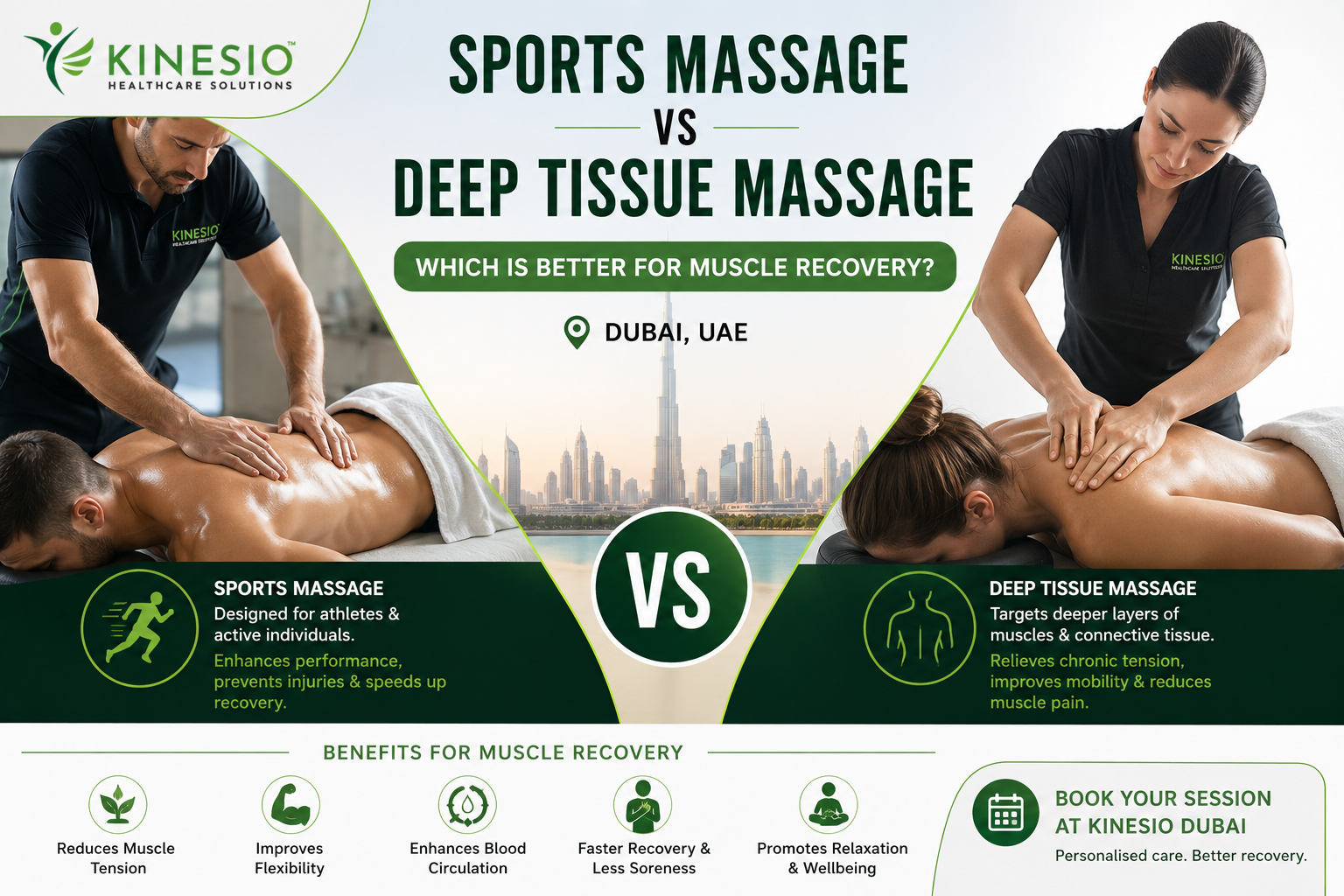
Is deep tissue massage better than sports massage for sore muscles?
Not necessarily. Sports massage is generally adapted around physical activity and sports recovery, while deep tissue massage focuses more broadly on deeper muscular and connective-tissue tension. The appropriate option depends on the individual.
Is sports massage painful?
Sports massage can involve firm pressure, but unnecessary or severe pain isn’t a sign that the treatment is more effective. Tell your practitioner if the pressure is uncomfortable.
How often should I get a sports massage?
There is no universal schedule. Frequency depends on your training volume, sport, recovery needs, symptoms and personal goals.
Can sports massage prevent injuries?
No massage can guarantee injury prevention. Injury risk is influenced by training load, strength, mobility, recovery, technique and previous injuries.
Should I get sports massage or physiotherapy?
Sports massage may be appropriate for recovery and muscular tightness. Physiotherapy is generally more appropriate when you need assessment and rehabilitation for an injury or ongoing musculoskeletal problem.
Where can I get sports massage in Dubai?
Kinesio Healthcare Solutions offers sports massage within its physiotherapy and rehabilitation services in Dubai. Contact the clinic to discuss your recovery needs and treatment options.
Final Takeaway
Sports massage can be a useful part of muscle recovery for active people, but it isn’t a replacement for proper recovery or injury assessment.
If your muscles feel tight or uncomfortable after running, gym training, football, tennis or padel, sports massage may help you feel more comfortable and support your overall recovery routine.
However, persistent, severe or recurring pain deserves more attention than simply increasing massage sessions.
The most effective approach is to understand what your body is telling you and choose treatment accordingly.
If you’re looking for sports massage in Dubai, Kinesio Healthcare Solutions can help you determine whether sports massage or a broader physiotherapy approach is appropriate for your recovery goals.